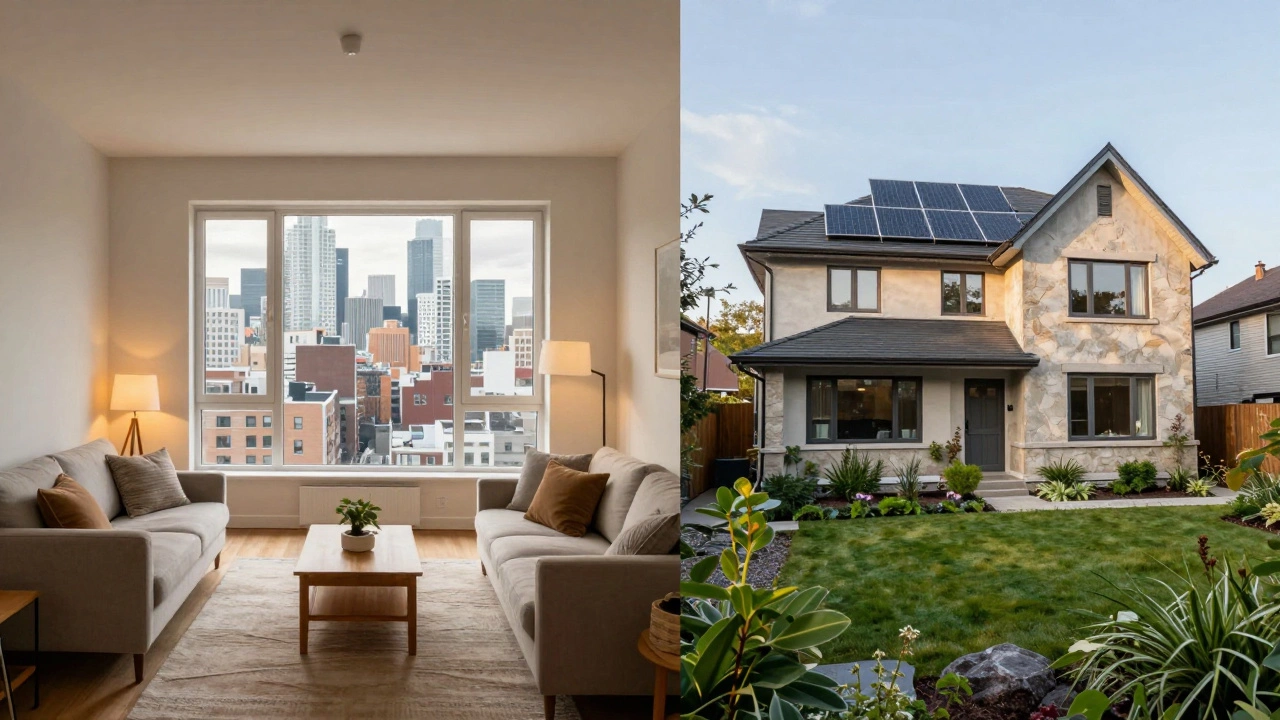
Apartment vs House: Eco-Footprint Calculator
Select your current or desired living situation to see how it impacts the environment.
Apartment / Flat
Multi-story building, shared walls, typically urban location.
Detached House
Standalone structure, private garden, often suburban/rural.
Your Environmental Score
/ 100 Points
Analysis
Detailed analysis will appear here.
Breakdown by Factor
💡 Recommendation
Personalized advice will appear here.
Imagine standing in your kitchen on a cold January morning. You’re trying to decide whether to buy that charming detached cottage with the big garden or stick with your current flat in the city center. The question isn’t just about square footage or commute times anymore. It’s about impact. Specifically, which choice puts less strain on the planet? This is one of the most common dilemmas for anyone looking to make their lifestyle more eco-friendly. The answer might surprise you because it depends heavily on how you define “green” and where exactly you live.
We often assume that houses are better because they have gardens for growing food or space for solar panels. But when we look at the raw data regarding energy use, land consumption, and material resources, apartments frequently come out ahead. However, it’s not a simple black-and-white scenario. Let’s break down the real environmental costs of both living arrangements so you can make an informed decision based on facts, not just feelings.
The Energy Efficiency Factor
When we talk about eco-friendliness, energy consumption is usually the first metric we check. Here, apartments generally hold a significant advantage due to basic physics. In a multi-story building, units share walls, floors, and ceilings with neighbors. This means less exterior surface area is exposed to the elements. Heat doesn’t escape as easily from a middle-floor apartment as it does from a standalone house surrounded by open air on all sides.
In Ireland, where winters are damp and chilly, this thermal mass matters immensely. A typical three-bedroom detached house requires significantly more heating energy than a two-bedroom apartment of similar internal volume. According to data from the Sustainable Energy Authority of Ireland (SEAI), single-family homes account for a disproportionate amount of residential heating demand. By sharing structural boundaries, apartment dwellers naturally reduce their need for active heating systems.
| Feature | Apartment (Mid-Unit) | Detached House |
|---|---|---|
| Exterior Surface Area | Low (Shared Walls) | High (All Sides Exposed) |
| Heating Requirement | Lower per sq. meter | Higher per sq. meter |
| Cooling Requirement | Lower (Shaded by structure) | Higher (Direct sun exposure) |
| Renewable Integration | Difficult (Limited roof access) | Easier (Private roof rights) |
However, there is a catch. Many older apartment blocks lack proper insulation or efficient heating controls. If you live in a poorly maintained high-rise, your energy bill-and carbon footprint-could be higher than expected. Newer builds, especially those meeting Passive House standards, eliminate this issue entirely. For houses, the ability to install solar panels or heat pumps is a major plus, but only if the home itself is well-insulated. An inefficient house with solar panels is still wasteful.
Land Use and Urban Sprawl
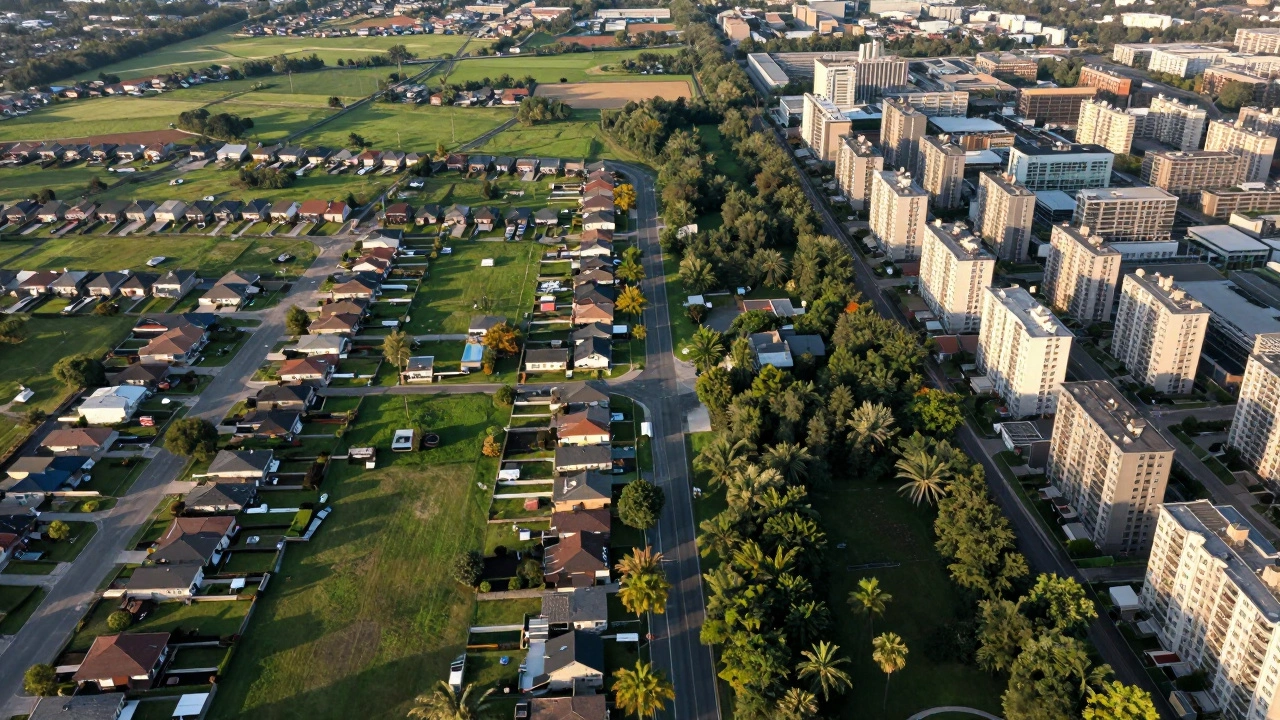
Beyond energy, we must consider land use. This is where the concept of urban sprawl becomes critical. Houses, particularly those in suburban developments, consume vast amounts of land. Each detached home requires space for the structure, a driveway, a garden, and often a lawn. This spread-out development pattern forces infrastructure like roads, sewage lines, and power grids to stretch further, increasing the material cost and environmental disruption of construction.
Apartments allow for vertical density. By stacking units, cities can house more people on smaller footprints. This preserves greenfield sites, protects biodiversity, and maintains agricultural land on the outskirts of towns. When we choose an apartment, we are effectively voting against the destruction of natural habitats for low-density housing. In places like Dublin, where land is scarce and valuable, high-density living is not just convenient; it’s ecologically necessary.
Think about the lifecycle of materials too. Building a house requires more concrete, steel, and timber per person than building an apartment block. The embodied carbon-the emissions generated during the manufacturing and transport of building materials-is significantly lower for dense housing. So, even before you turn on the lights, the apartment has already started its eco-friendly journey.
Transportation and Daily Habits
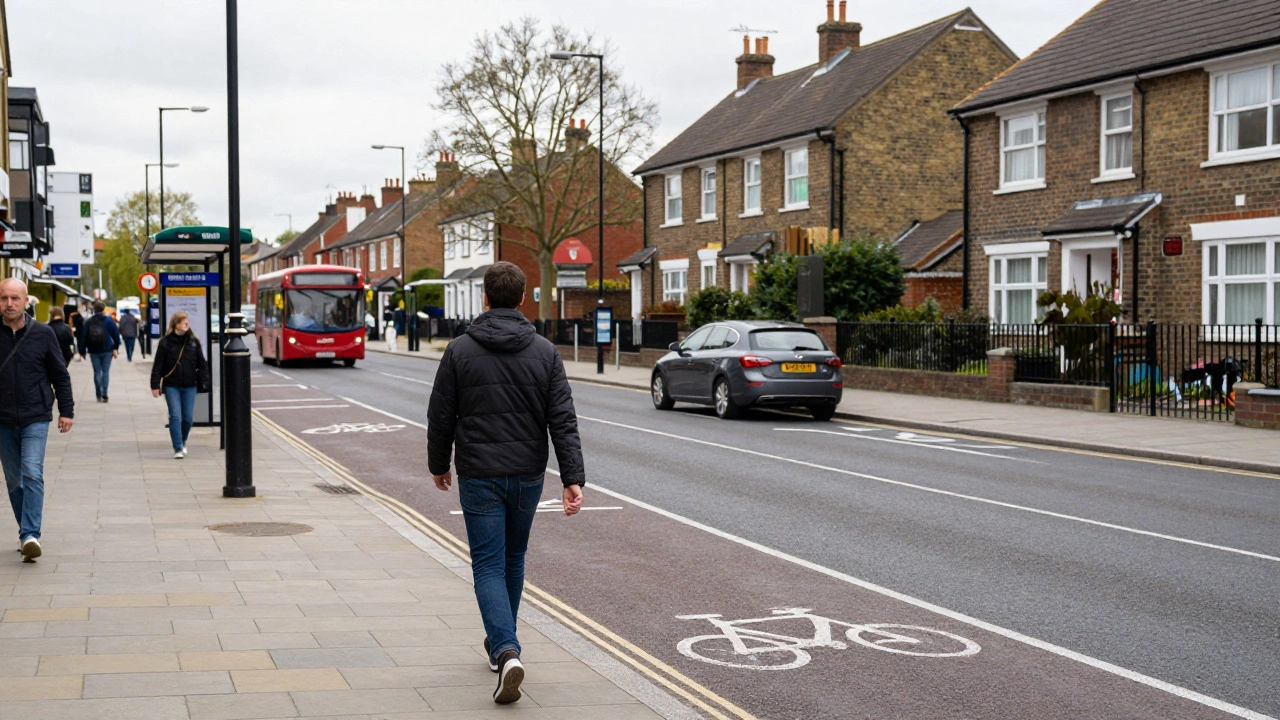
Your daily routine plays a huge role in your overall carbon footprint, and where you live dictates much of that routine. Apartments are typically located closer to city centers, public transport hubs, and amenities. Residents are far more likely to walk, cycle, or take the bus to work. In contrast, house owners in suburban areas often rely on cars for almost every trip, from grocery shopping to school runs.
If you live in a detached house ten miles from the city center, your transportation emissions will likely outweigh any savings you made on heating. Studies consistently show that car dependency is the largest contributor to household carbon footprints in developed nations. By choosing an apartment in a well-connected area, you reduce your reliance on fossil fuels for travel. This shift in behavior is often more impactful than swapping lightbulbs or recycling paper.
That said, some modern eco-friendly cottages and rural homes are designed with sustainability in mind. They might feature rainwater harvesting, composting toilets, and extensive vegetable gardens. These features can offset some environmental impacts, but they require active management and effort. For the average homeowner, the convenience of a car often wins out over sustainable habits.
The Verdict: Context Matters
So, is it more eco-friendly to live in an apartment or a house? Generally, yes, apartments are the greener choice due to superior energy efficiency, lower material usage, and reduced transportation needs. They support compact, resilient communities that are easier to service and maintain without destroying the surrounding environment.
However, a well-designed, energy-efficient house in a location with good public transport links can rival an apartment’s footprint. The key is intentionality. Whether you choose a flat or a cottage, focus on reducing energy waste, minimizing car use, and supporting local ecosystems. The best eco-friendly home is the one that fits your lifestyle while respecting the limits of our planet.
Do apartments really save more energy than houses?
Yes, mid-unit apartments typically use 25-40% less energy for heating and cooling compared to detached houses of similar size. This is because they share walls and roofs with neighboring units, reducing heat loss through exterior surfaces.
Can I make my house more eco-friendly if I don't want to move?
Absolutely. Improving insulation, switching to a heat pump, installing smart thermostats, and adding solar panels can drastically reduce a house's carbon footprint. Even small changes like sealing drafts and using LED lighting help.
Why is urban sprawl bad for the environment?
Urban sprawl consumes large amounts of land, leading to habitat loss and increased infrastructure costs. It also encourages car dependency, which raises transportation emissions. Dense living preserves green spaces and reduces the need for new roads and utilities.
Are eco-friendly cottages a viable alternative?
Yes, if they are built with sustainable materials, excellent insulation, and renewable energy systems. However, their remote locations often increase transportation emissions, so they work best for those who work remotely or live locally.
How does transportation affect my home's eco-friendliness?
Transportation often accounts for the largest portion of a household's carbon footprint. Living in an apartment near public transit allows you to walk, bike, or take buses, significantly lowering emissions compared to driving from a suburban house.