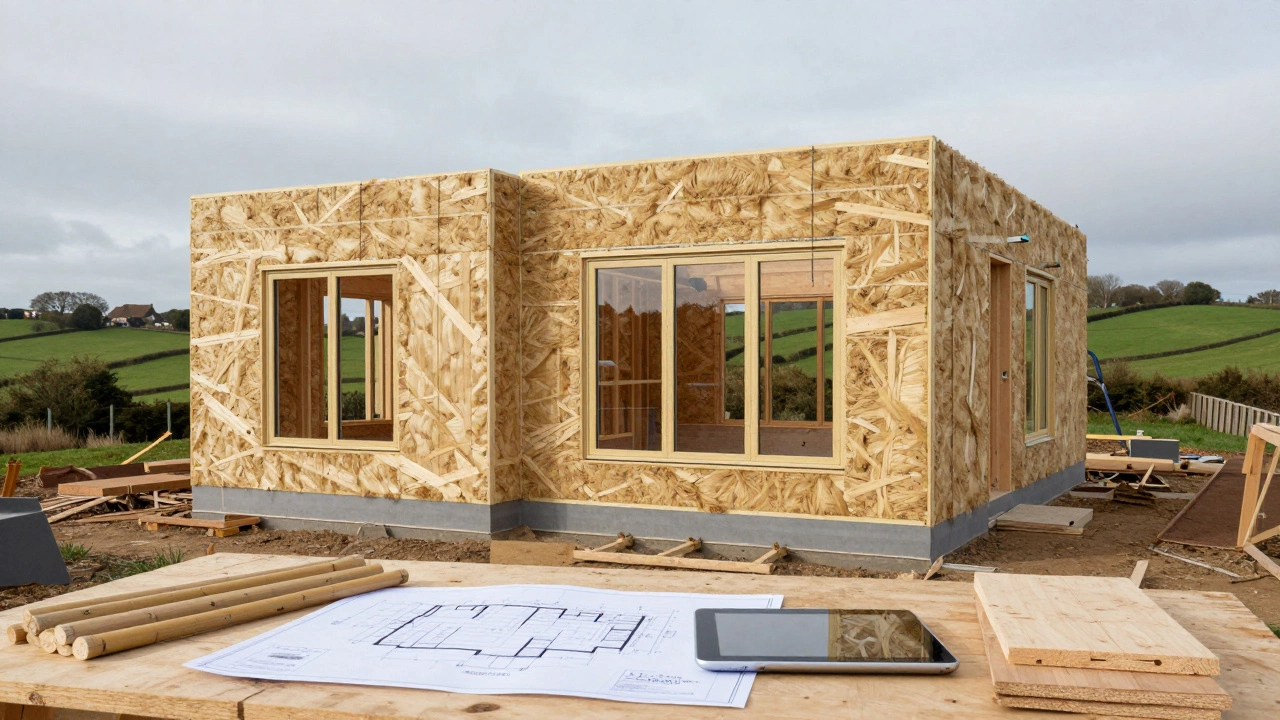
Eco-Build Investment & Payback Estimator
You’ve probably seen the stunning renders of glass-walled homes powered by the sun and gardens that double as food forests. It looks effortless in a brochure, but if you're actually planning to build, you'll quickly find that eco-friendly home limitations aren't just about the budget. You're fighting against a construction industry that is still deeply rooted in old ways, facing zoning laws that weren't written for compost toilets, and dealing with materials that don't always behave the way you'd hope. It's a rewarding journey, but it's often a battle of attrition against the status quo.
Key Takeaways for Sustainable Builders
- Upfront costs are usually 5-15% higher, though energy bills drop significantly.
- Finding contractors who actually understand passive design is the hardest hurdle.
- Local building codes can often block innovative green tech like greywater recycling.
- Eco-materials sometimes require longer lead times for delivery and installation.
- The "perfect" green home is a myth; it's all about making the best trade-offs for your specific site.
The Financial Wall: More Than Just the Sticker Price
Let's be honest: going green usually costs more at the start. When you swap standard fiberglass insulation for Cellulose Insulation a sustainable insulation material made from recycled paper treated with boric acid for fire resistance, or choose triple-pane windows over double, the invoices climb. It's not just the materials; it's the specialized labor. A standard crew knows how to slap up drywall and pour concrete, but they might not know how to seal a Passive House a rigorous voluntary standard for energy efficiency in building, reducing the ecological footprint to airtight standards. You'll likely pay a premium for a certified specialist to ensure you don't end up with mold and moisture trapped in your walls.
Then there's the "green premium" on materials. While bamboo is great, sourcing high-quality, sustainably harvested bamboo flooring from overseas can be more expensive than buying local pine. You have to weigh the carbon cost of shipping against the sustainability of the material itself. If you're building eco-friendly cottages small, sustainably constructed dwellings designed to minimize environmental impact, these costs are felt more acutely because you have less square footage to spread the fixed costs across.
| Material | Upfront Cost | Primary Limitation | Long-term Value |
|---|---|---|---|
| Recycled Steel | High | High embodied energy in transport | Extreme durability |
| Rammed Earth | Moderate | High labor intensity / Site specific | Natural thermal mass |
| Cross Laminated Timber (CLT) | High | Availability of certified suppliers | Carbon sequestration |
| Hempcrete | Moderate | Long drying times before finishing | Breathability and insulation |
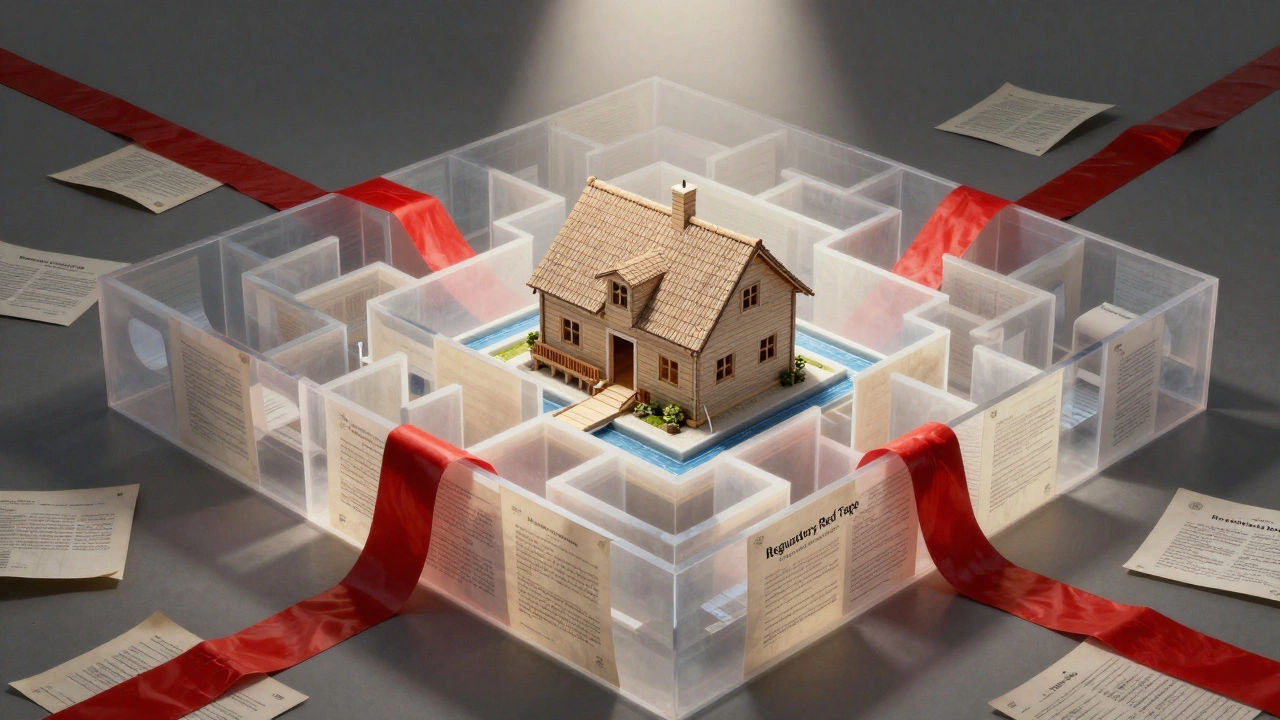
Regulatory Red Tape and Zoning Nightmares
You might have a brilliant plan for a Composting Toilet a toilet that treats human waste through biological decomposition or a sophisticated rainwater harvesting system, only to have your local building inspector tell you it's illegal. Many municipal codes are based on 20th-century plumbing standards. They want a connection to the city sewer, even if you're in a rural area where a decentralized system makes more sense. Trying to get a permit for a "cob house" or a straw-bale structure often requires an architectural engineer to sign off on things that the local council doesn't understand, which adds months to your timeline and thousands to your budget.
Zoning laws also limit how you can position your home. To maximize Passive Solar Design a method of building that uses the sun's energy for heating and cooling through strategic orientation and glazing, you need to align your house with the sun's path. But if your plot of land is narrow or has weird setback requirements, you might be forced to put your biggest windows on the north side (in the northern hemisphere), effectively killing your energy efficiency before you've even broken ground.
The "Green Skill Gap" in Construction
One of the biggest hidden limitations is the lack of a skilled workforce. If you tell a general contractor you want a "super-insulated, airtight home," they might nod and say they can do it, but if they don't actually know how to use a Blower Door Test a diagnostic tool used to measure the airtightness of a building by pressurizing the interior, you're in trouble. A poorly executed eco-home is worse than a standard home. If the air sealing is wrong, you'll get condensation inside your walls, leading to structural rot and black mold.
You'll find that the more niche the technology-like Ground Source Heat Pumps a system that transfers heat from the ground into a building for heating or cooling-the harder it is to find someone to service it. Imagine your heating system breaks down in the middle of January and the only technician certified to fix it is three counties away. This "maintenance gap" is a real risk that people often overlook in the excitement of the build.
Material Limitations and the "Embodied Carbon" Trap
Not all "green" materials are created equal. There's a constant tension between operational carbon (the energy you use to heat and cool the house) and embodied carbon (the energy used to make and transport the materials). For example, high-performance PVC windows are great for stopping heat loss, but the process of making PVC is chemically intensive and polluting. On the flip side, using locally sourced reclaimed timber is great for the planet, but it might not have the same structural rating or precision as factory-cut lumber, meaning your walls might not be perfectly straight.
Then there's the issue of longevity. Some bio-based materials, like straw or hemp, require very specific moisture management. If you don't get the "breathability" of the walls right, these materials can degrade. You're essentially moving from a "fail-safe" system (concrete and steel) to a "managed" system that requires more attention and a deeper understanding of how the house "breathes." This means the homeowners have to be more engaged with the building's health than they would be in a standard suburban home.
Designing for the Future vs. Today's Reality
Trying to build a home that is "future-proof" often leads to over-engineering. Many people spend a fortune on massive solar arrays and battery backups that will be obsolete in ten years because battery technology is moving so fast. The limitation here is the pace of innovation. Do you spend $30,000 now on a battery system, or do you build the house with the infrastructure (like conduits and space) to easily add a better system in 2030?
There's also the psychological limitation of living in a high-efficiency home. A truly airtight house requires a Heat Recovery Ventilator (HRV) a system that provides a constant supply of fresh filtered air while recovering heat from the outgoing stale air. If you don't like the sound of a fan running in the background or the feeling of controlled ventilation, the "perfect" eco-home might feel more like a laboratory than a cozy cottage. Finding the balance between technical performance and human comfort is where most eco-projects either succeed or fail.
Does an eco-friendly home always cost more to build?
Generally, yes, the initial capital expenditure is higher due to premium materials and specialized labor. However, these costs are often offset within 7 to 15 years through drastically lower utility bills and higher property resale values. The key is focusing on "passive" strategies (like orientation and insulation) first, which are cheaper than "active" tech (like high-end solar arrays).
Are green materials less durable than traditional ones?
Not necessarily, but they behave differently. While concrete is forgiving of moisture, bio-materials like hempcrete or straw-bale need a "breathable" exterior (like lime plaster instead of acrylic paint) to prevent rot. If maintained correctly, many sustainable materials can actually outlast modern industrial ones, but they require a more specific maintenance regime.
How do I find a contractor who knows how to build sustainably?
Don't trust a generic "green" label. Look for specific certifications like Passive House (Passivhaus) or LEED. Ask for a portfolio of completed projects and, more importantly, ask for the contact info of previous clients to see if the house actually performs as promised in terms of energy bills. If they can't provide data, they're likely just "greenwashing" their standard process.
Can you retrofit an old house to be eco-friendly, or is it better to build new?
Retrofitting is often the most sustainable choice because it avoids the embodied carbon of a new build. However, you'll face limitations with the existing structure, such as outdated wiring or foundations that can't support heavy green roofs. Deep retrofits can reach near-passive levels, but they often require more creative problem-solving than starting from scratch.
What is the most common mistake people make when building an eco-home?
The "gadget trap." Many people spend their budget on expensive gadgets-like smart home systems and high-end solar panels-while neglecting the basics like high-quality air sealing and thermal bridging. A house with a huge solar array but leaky windows is still an inefficient house. Focus on the building envelope first, then add the technology.
Next Steps for Your Sustainable Build
If you're just starting, don't try to do everything at once. Begin by conducting a site analysis to see where the sun and wind actually hit your land. This costs almost nothing but saves you thousands in heating and cooling costs. Next, create a "priority list" of non-negotiables-maybe you care more about water independence than net-zero energy. This prevents you from getting overwhelmed by the endless list of "must-have" green features.
For those in rural areas planning cottages, look into local kinship networks of sustainable builders. Often, the best knowledge isn't in a textbook but in the hands of someone who built a high-performance home three miles down the road. Start with the envelope, keep your design simple, and remember that a house that is "mostly" green and actually finished is better than a "perfect" green house that never gets built because you ran out of money.