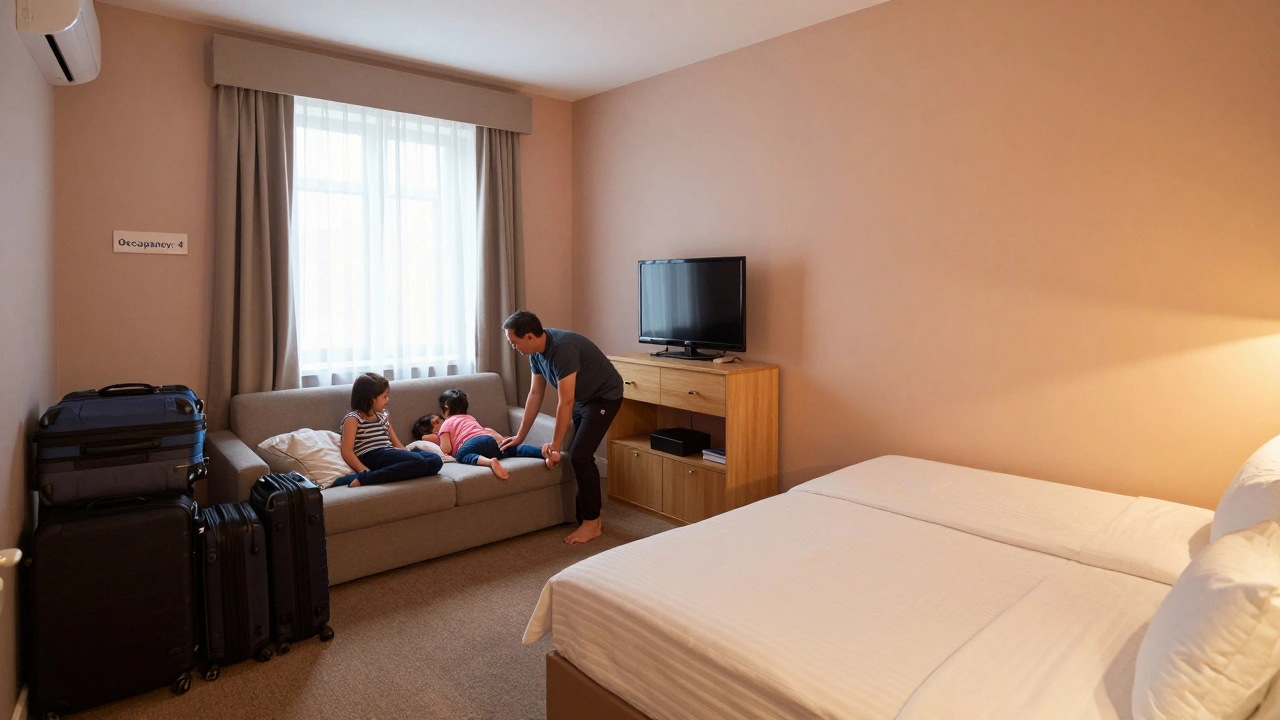
Hotel Room Occupancy Calculator
- Always check hotel's specific child age policy (varies by region)
- Some hotels charge for rollaway beds ($15-$50/night)
- Family rooms typically have 2-3 beds with maximum occupancy of 4
- For kids under 12, check if they stay for free
Ever booked a hotel room for your family of four and realized the website only showed a double bed? You’re not alone. Many parents assume hotels automatically accommodate kids, but the truth is more complicated. The answer to can a family of 4 stay in one hotel room? is usually yes-but not always, and not without planning.
How hotel rooms are designed for families
Most hotels in the U.S., Canada, Western Europe, and Australia design rooms with families in mind. The standard setup for a family of four? Two double beds, or one king bed with a pull-out sofa. Some even offer rooms with two queen beds. These are often labeled as "family rooms" or "quad occupancy" rooms. But don’t assume. Always check the room type description before booking.Hotels in Europe, especially older ones, sometimes have smaller rooms. A double bed with a single pull-out couch might be the only option. That’s still enough for two adults and two kids under 12, but it gets tight if your kids are teens or you need extra space.
Chain hotels like Holiday Inn, Hilton Garden Inn, and Best Western usually list occupancy limits clearly. For example, a "Standard Room" might say "Max 2 adults + 2 children under 12." That’s your green light. But if it says "Max 2 guests," don’t try to squeeze in four. You’ll risk being charged extra-or kicked out.
What "occupancy limit" really means
Every hotel room has a legal occupancy limit. This isn’t just a suggestion-it’s based on fire codes, room size, and bathroom capacity. In the U.S., the typical limit is two adults plus two children under 18. In the EU, it’s often two adults plus two under 12. Some places, like Japan or parts of the UK, have stricter rules.Why does this matter? Because hotels charge extra for each extra person. If you book a room for two and show up with four, you’ll pay a fee-sometimes $25 to $50 per night per extra guest. And if you lie about your group size, the front desk might refuse your check-in.
Here’s a real example: I stayed at a mid-range hotel in Dublin last year. The room had two double beds and listed a max of four guests. But when I asked if a 14-year-old counted as a child or an adult, the staff said it depended on whether they needed an extra bed. They didn’t have one. So we got a rollaway for €15 a night. It was cramped, but it worked.
What to look for when booking
Not all hotel websites are clear. Some just say "sleeps 4" without explaining how. Here’s what to check:- Bed configuration: Two doubles? One king + sofa? Two queens? Avoid rooms with only one bed unless you’re okay with kids sharing.
- Age limits for children: Some hotels only allow kids under 12 to stay free. Others cap it at 16. If your child is 13, they might be charged as an adult.
- Extra bed fees: Does the hotel charge for rollaways? Are they available? Some hotels don’t offer them at all.
- Room size: Look for square footage. A 200 sq ft room with two beds is going to feel like a closet with four people in it.
Pro tip: Use filters on booking sites. Search for "family room," "quad occupancy," or "sleeps 4." Avoid "standard" or "deluxe" rooms unless you’ve confirmed the layout.

When one room just won’t cut it
There are times when trying to cram four people into one room is a bad idea:- Your kids are teens and need privacy
- You’re traveling with a baby and need space for a crib
- You’re staying more than 3 nights
- You’re in a city with expensive rooms (like New York, London, or Tokyo)
In those cases, consider two rooms. It might sound expensive, but it’s often cheaper than paying for extra beds, and way more comfortable. Many hotels offer connecting rooms for families. Ask when booking.
Another option? Book a suite. A one-bedroom suite with a living area and sofa bed gives you real space. It’s usually only 20-30% more than a standard room-and worth it for a week-long trip.
What hotels don’t tell you
Hotels rarely mention one thing: noise. A family of four in one room means more movement, more chatter, more bathroom use. If your kids are young, they’ll wake up early. If they’re teens, they’ll stay up late. You’ll hear them. And they’ll hear you.Also, bathrooms. Many family rooms have one small bathroom. Two adults and two kids trying to get ready for school or a morning flight? That’s a rush job. Some hotels have two sinks. Ask.
And don’t forget the minibar. Some hotels charge for any item taken-even a bottle of water-if it’s not in the room’s original packaging. If your kids snack on the way home, you might get a surprise bill.
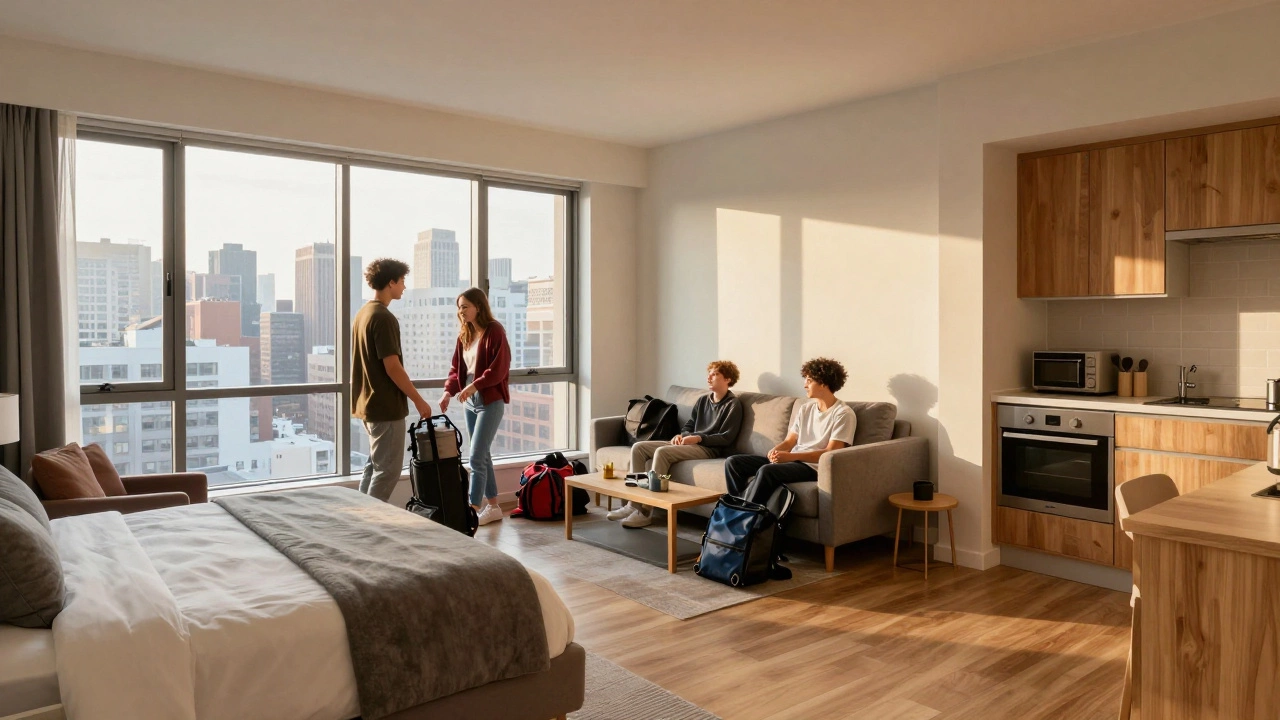
Real-world examples
In the U.S., chains like Marriott’s Courtyard and Hyatt’s Home2 Suites are family-friendly. They offer rooms with two beds, kitchenettes, and no extra fees for kids under 17.In Europe, Accor’s Ibis and Novotel brands are reliable. Their "Family Room" typically has two double beds and a TV, with no extra charge for two kids under 12. In Italy and Spain, many hotels include kids in the price up to age 14.
But in Japan? It’s different. A standard hotel room is often just big enough for two. Many don’t allow more than two guests per room. If you need space, book a family suite or consider an Airbnb.
Alternatives to hotel rooms
If you’re struggling to find a room that fits your family, consider:- Apartment hotels: Think Extended Stay America or Staybridge Suites. They have kitchens, laundry, and separate living areas.
- Hostels with family rooms: Many European hostels now offer private family rooms with bunk beds and private bathrooms.
- Vacation rentals: Airbnb, Vrbo, or Booking.com’s "Apartments" filter. You get space, privacy, and often a kitchen.
These options often cost less than a hotel suite and give you room to breathe. For longer trips, they’re usually smarter.
Final advice
Yes, a family of four can stay in one hotel room. But it’s not automatic. You have to ask the right questions. Always check:- Max occupancy number
- Bed types and sizes
- Extra bed policies
- Age limits for free stays
- Room dimensions
If the hotel says "yes," but the room looks tiny on Google Street View? Call them. Ask for a photo. Most front desk staff will send one.
And if you’re unsure? Book two rooms. It’s not a failure-it’s a smart move. Comfort matters more than saving $50 a night. Your kids will sleep better. You’ll relax more. And you won’t spend your vacation wondering if you made the right choice.
Can four adults stay in one hotel room?
Almost never. Most hotels cap occupancy at two adults, with optional children. Four adults in one room violates fire codes in most countries. If you try, you’ll be charged for overcapacity, or asked to leave. Always book two rooms or a suite for four adults.
Do hotels charge extra for kids?
It depends. Many hotels allow kids under 12 or 16 to stay free if they use existing bedding. But if you need a crib, rollaway, or extra pillow, you might pay. Always ask about child policies before booking. Some charge per child after age 12.
What’s the difference between a family room and a standard room?
A family room is designed for more than two people. It usually has two beds (double, queen, or king) and may include a sofa bed. Standard rooms are meant for two guests only. Family rooms are often larger, have extra storage, and sometimes include a small fridge or sink.
Can I bring a third child if the room says "sleeps 4"?
If "sleeps 4" means two adults and two children, then no. Adding a third child usually means you’re over capacity. Even if the room looks big enough, hotels have legal limits. You’ll likely be charged a fee or turned away. Always confirm the occupancy rules with the hotel directly.
Are there hotels that allow 5 people in one room?
Rarely. Some large resorts or vacation rentals might offer rooms for five, but these are exceptions. Most hotels cap at four. If you need space for five, book two rooms or a villa. Don’t assume it’s possible-always ask and get it in writing.