Farmhouse & Cottage Style Mixer
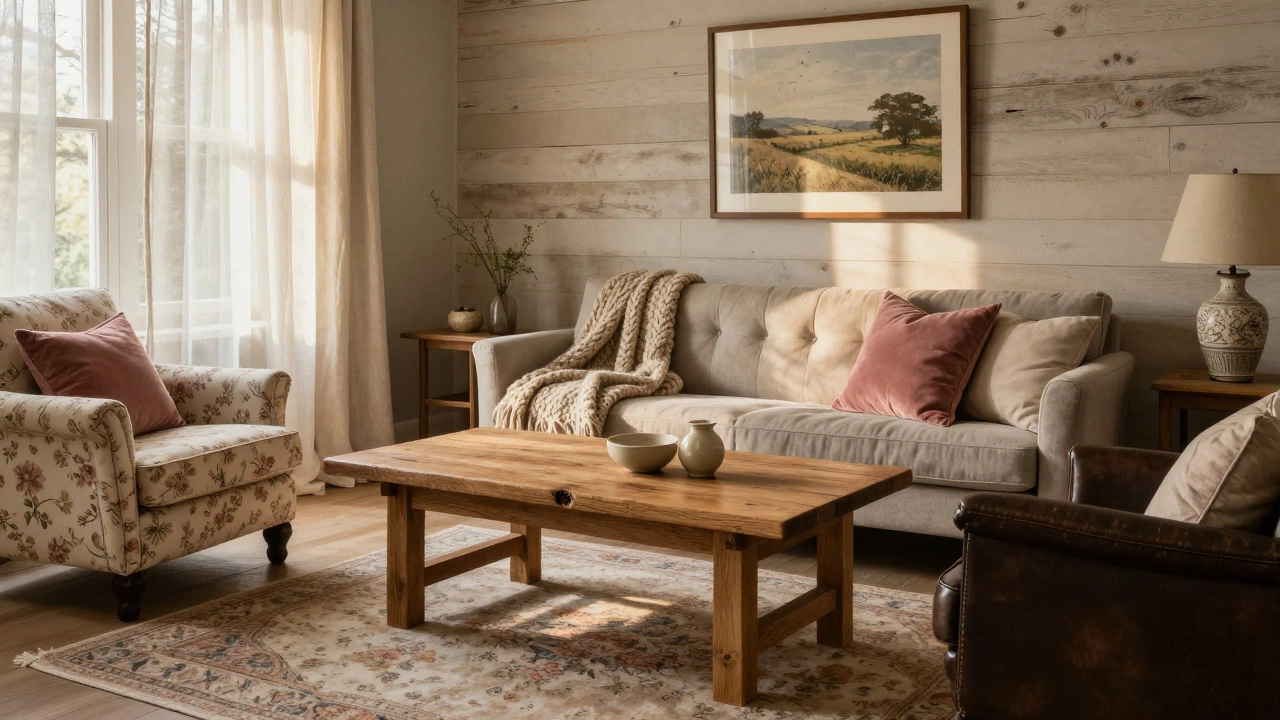
Example: Creamy white walls with dusty rose throw pillows and a wooden dining table.
People often ask if you can mix farmhouse and cottage styles - like trying to blend two different kinds of quiet, cozy living. The short answer? Yes, and it’s one of the most lived-in, comforting looks you can create right now. It’s not about matching perfectly. It’s about feeling at home.
Why This Mix Makes Sense
Farmhouse and cottage styles both come from rural roots, but they speak different dialects. Farmhouse leans into sturdy, practical charm - think wide-plank floors, exposed beams, and iron hardware. Cottage is softer - think lace curtains, pastel paint, and worn wooden furniture that looks like it’s been passed down for generations. When you blend them, you get warmth without sterility, function without clutter.
In 2026, this combo isn’t just popular - it’s become the default for homes that want to feel lived-in, not staged. A survey by the National Association of Home Builders found that 68% of homeowners under 45 who built or renovated in the past two years chose a hybrid style. They didn’t want sleek minimalism. They wanted texture, history, and comfort.
How to Blend the Two Without Clashing
You don’t need a designer to pull this off. Start with three anchors: color, texture, and furniture.
- Color: Use farmhouse neutrals - creamy whites, warm grays, soft sage - as your base. Then layer in cottage tones: dusty rose, faded blue, butter yellow. Don’t paint every wall a different color. Pick one room to go full cottage (like a bedroom) and keep the rest calm.
- Texture: Mix rough and soft. A farmhouse-style wooden dining table? Pair it with upholstered chairs covered in linen. A cottage-style tufted bench? Put it at the foot of a bed with a chunky knit throw. The contrast is what makes it feel real, not curated.
- Furniture: Don’t buy matching sets. Hunt for one or two farmhouse pieces - maybe a solid oak armoire or a heavy iron pot rack - and then fill in with cottage finds: a vintage dresser with chipped paint, a wicker basket for blankets, a small side table with turned legs.
One common mistake? Trying to make everything match. That’s not the point. The magic happens when you see a weathered barn door next to a lace-trimmed pillow. They don’t have to be from the same century - just the same feeling.
Room-by-Room Guide
Living Room: Start with a large, sturdy sofa in a neutral linen. Add a vintage rug with faded patterns. Put a farmhouse-style coffee table in the center - maybe one with visible saw marks - and surround it with mismatched armchairs. One could be upholstered in floral cotton, another in dark leather. The key is balance: one bold piece, two soft ones.
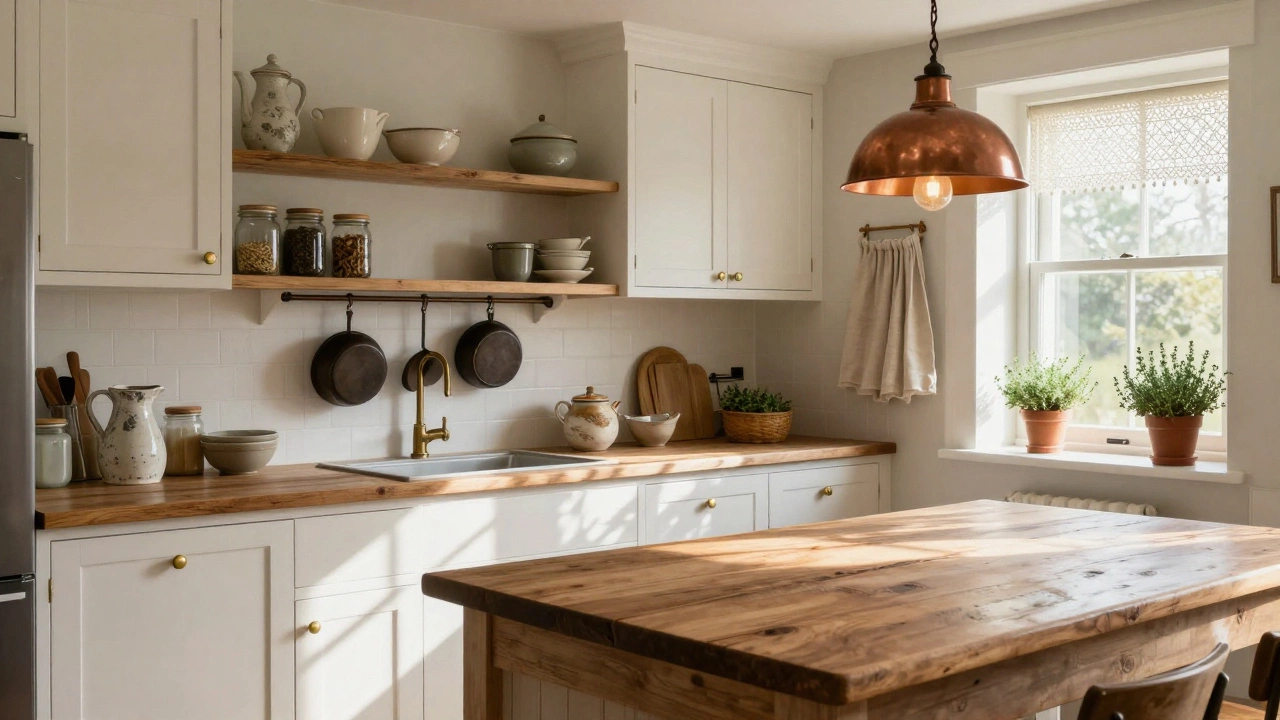
Kitchen: White shaker cabinets are a farmhouse staple. Swap out the handles for brass cup pulls - that’s a cottage touch. Open shelving? Yes. But don’t stack everything neatly. Leave one shelf with mismatched stoneware, a few jars of dried herbs, and a small ceramic pitcher that’s been on the windowsill for ten years. That’s the soul of the mix.
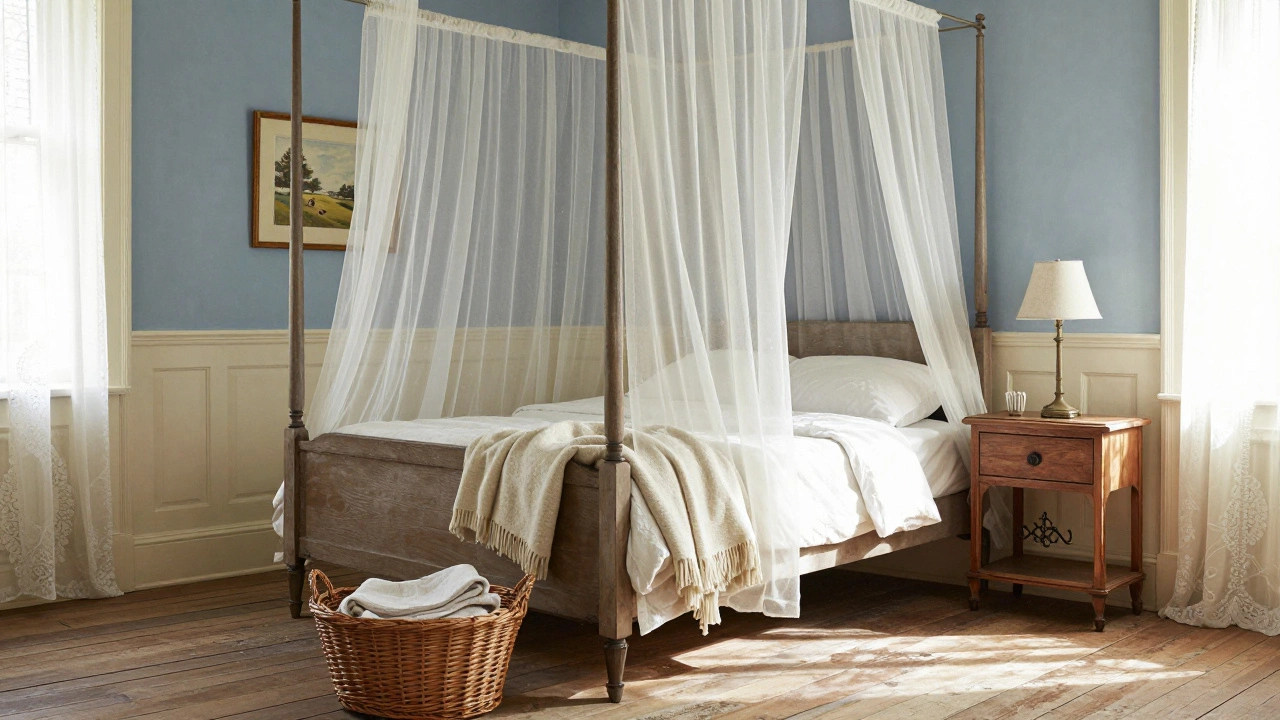
Bedroom: Go all-in on cottage here. A four-poster bed with a sheer canopy? Perfect. But add a farmhouse-style wooden nightstand with iron detailing. Drape a wool blanket over the footboard. Hang a single framed print of a rural landscape - not a print, but a real one, maybe found at a flea market. It doesn’t need to be expensive. It just needs to feel like it belongs.
Bathroom: This is where most people get stuck. Keep the tiles simple - matte white or soft gray. Add a wooden vanity with a worn finish. Swap the towel bars for antique brass. Hang a cotton shower curtain with tiny embroidered flowers. The mix here is subtle, but it turns a functional space into a retreat.
What Not to Do
Don’t go overboard with patterns. If your curtains are floral, skip the striped rug. If your walls are painted a soft blue, don’t add a red-and-white checked tablecloth. Pick one pattern and let it breathe.
Don’t fake age. Don’t buy new furniture and sand it down to look old. Real patina comes from time - not a power sander. Look for pieces with natural wear: a drawer that sticks slightly, a chair leg that’s worn smooth from years of use. That’s the stuff that makes the style feel authentic.
And don’t forget lighting. Farmhouse lighting is often bold - chandeliers, pendant lamps with metal shades. Cottage lighting is softer - wall sconces, lanterns, table lamps with fabric shades. Use both. A large pendant over the kitchen island? Great. Add a small lamp with a linen shade on the bedside table? Even better.
Real Examples You Can Copy
One homeowner in Vermont took a 1920s farmhouse and added cottage elements one by one. She kept the original wood floors and ceiling beams - classic farmhouse. Then she painted the kitchen cabinets a pale lavender, installed a clawfoot tub in the bathroom, and hung a collection of vintage aprons on the wall. No one would call it purely one style. But everyone who walks in says, “I want to live here.”
Another family in Pennsylvania turned a small cottage into a weekend escape. They kept the original stone fireplace and tiny windows - pure cottage. Then they added a long wooden dining table from an old barn, a cast-iron stove, and a hanging herb garden outside the back door. It’s not a magazine spread. It’s a place where kids leave muddy boots by the door and coffee mugs sit on every surface.
Why This Style Lasts
It’s not about trends. It’s about memory. Farmhouse reminds us of hard work, simple tools, and steady rhythms. Cottage reminds us of quiet mornings, tea in the garden, and stories told by candlelight. When you blend them, you’re not decorating - you’re building a life.
That’s why this mix isn’t going away. In 2026, people aren’t looking for perfection. They’re looking for peace. And peace doesn’t come from matching everything. It comes from letting things be a little worn, a little different, a little human.
Can you mix farmhouse and cottage in a small space?
Yes - and small spaces actually benefit from the mix. Use farmhouse elements for structure: a sturdy wooden table, open shelving, a simple fireplace. Then soften it with cottage touches: sheer curtains, a patterned throw, a vintage mirror. Light colors help, too. White walls, pale wood floors, and a single pop of pastel keep the room feeling open and cozy, not crowded.
What’s the difference between farmhouse and cottage decor?
Farmhouse is about durability and function - think thick wood, iron, and neutral tones. Cottage is about softness and charm - think lace, pastels, and worn furniture. Farmhouse feels grounded; cottage feels dreamy. Together, they balance each other: one keeps the space real, the other keeps it gentle.
Is farmhouse-cottage mix expensive to create?
Not at all. You don’t need new furniture. Thrift stores, flea markets, and estate sales are goldmines. Look for wooden pieces with solid construction - they’re often cheaper than modern ones. A chipped dresser painted white costs less than $100 and becomes a centerpiece. The style thrives on found objects, not high-end labels.
Can you mix farmhouse and cottage with modern elements?
Absolutely. A sleek black stove in a farmhouse kitchen works with a cottage-style window seat. A minimalist pendant light over a rustic table feels intentional, not jarring. The key is contrast. Let modern pieces stand out as accents - not replacements. They should feel like they chose to be there, not like they were forced in.
What’s the easiest way to start blending the two styles?
Start with one room - the bedroom or living room. Pick one farmhouse piece (like a wooden bed frame or a heavy coffee table) and then add three cottage items: a floral pillow, a woven basket, and a lamp with a fabric shade. That’s it. You don’t need to overhaul everything. Small changes create the biggest shift.