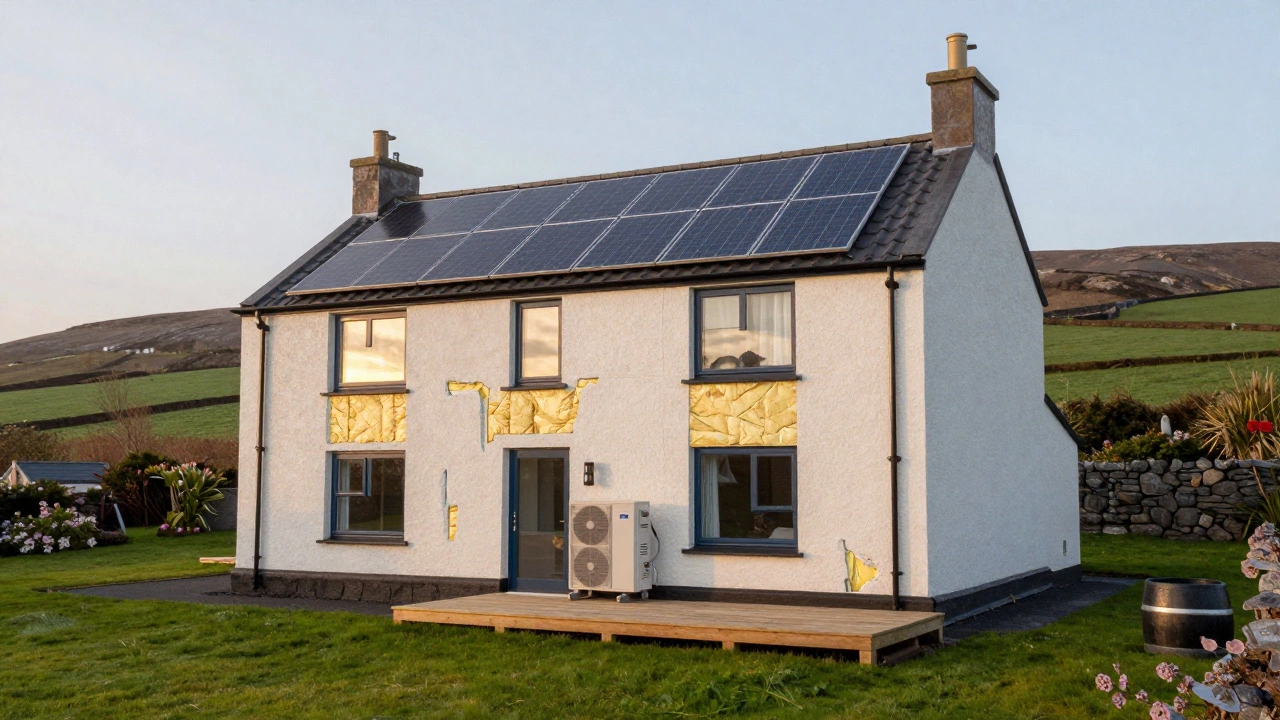
Eco-House Savings Calculator
Calculate Your Eco-House Savings
Your Savings Breakdown
Upfront Investment
Total Premium:
After Grants: €0
Annual Savings
Energy Savings: €0
Maintenance Savings: €0
Total Annual Savings: €0
Payback Period
Your investment will pay for itself in approximately 0 years.
Long-Term Savings
After 10 years: €0
After 15 years: €0
After 20 years: €0
After 30 years: €0
Based on Ireland's current energy costs and SEAI grant schemes. Savings may vary based on location, system efficiency, and future energy prices.
When people ask how expensive eco-friendly houses are, they’re usually thinking about one thing: cost. Is going green going to break the bank? The short answer? It depends - but not in the way you might think. In 2026, building or buying an eco-friendly cottage doesn’t mean paying double. In fact, many homeowners are finding that going sustainable actually saves money over time - if you know where to focus.
What Makes a House Eco-Friendly?
Before we talk price, let’s clear up what we’re even talking about. An eco-friendly house isn’t just about solar panels on the roof or a compost bin in the yard. It’s a system. Think insulation so thick it feels like a thermos, windows that keep heat in during winter and out in summer, and materials that don’t pollute the air inside your home. In Ireland, where winters are damp and energy bills climb, these features aren’t luxuries - they’re necessities.
Here’s what actually matters:
- High-performance insulation (at least 300mm in walls, 400mm in roofs)
- Airtight construction with mechanical ventilation (MVHR systems)
- Triple-glazed windows with low-emissivity coatings
- Renewable energy sources like solar PV or heat pumps
- Sustainably sourced materials - like timber from certified forests, recycled steel, or hempcrete
- Water-saving fixtures and rainwater harvesting
These aren’t optional upgrades. They’re the baseline for any home built to modern green standards - especially if you want to qualify for government grants or meet building regulations.
Upfront Costs: What You Pay at the Start
Let’s get real about numbers. In Ireland, building a standard detached cottage in 2026 costs around €2,800 per square meter. For a 120m² home, that’s roughly €336,000.
Now add eco-features. You’re looking at a 15% to 25% premium upfront. That means:
- €380,000 to €420,000 for a fully sustainable cottage
Where does that extra money go?
- Insulation: €15,000-€25,000 (compared to €5,000 in a standard build)
- Heat pump: €10,000-€14,000 (vs. €5,000 for a gas boiler)
- Triple-glazed windows: €12,000-€18,000 (vs. €6,000 for double-glazed)
- Solar panels: €6,000-€10,000 (with battery storage)
- Green materials: €8,000-€15,000 (hempcrete, recycled timber, non-toxic paints)
That’s a lot. But here’s the catch: you’re not paying all of it out of pocket. Ireland’s Sustainable Energy Authority of Ireland (SEAI) offers grants of up to €7,000 for heat pumps, €4,500 for attic and wall insulation, and €2,400 for solar PV. If you’re building new, you can combine these with the Help-to-Buy scheme and local authority incentives. In many cases, that cuts the green premium down to just 5-8%.
What You Save Over Time
Here’s where eco-homes flip the script. A typical Irish home spends €2,800 a year on heating and electricity. An energy-efficient cottage? Around €400-€600. That’s €2,200 saved annually.
That means:
- By year 7, you’ve paid back the extra upfront cost - even if you paid €50,000 more to build green.
- By year 15, you’ve saved over €30,000 in energy bills alone.
- By year 30? You’ve saved more than the original cost of the house.
And that’s just energy. Eco-homes also cost less to maintain. No mold from damp walls. No leaking roofs because of poor insulation. No replacing boilers every 10 years. One homeowner in County Clare told me her maintenance costs dropped by 60% after moving into her passive house. She hadn’t even considered that part.
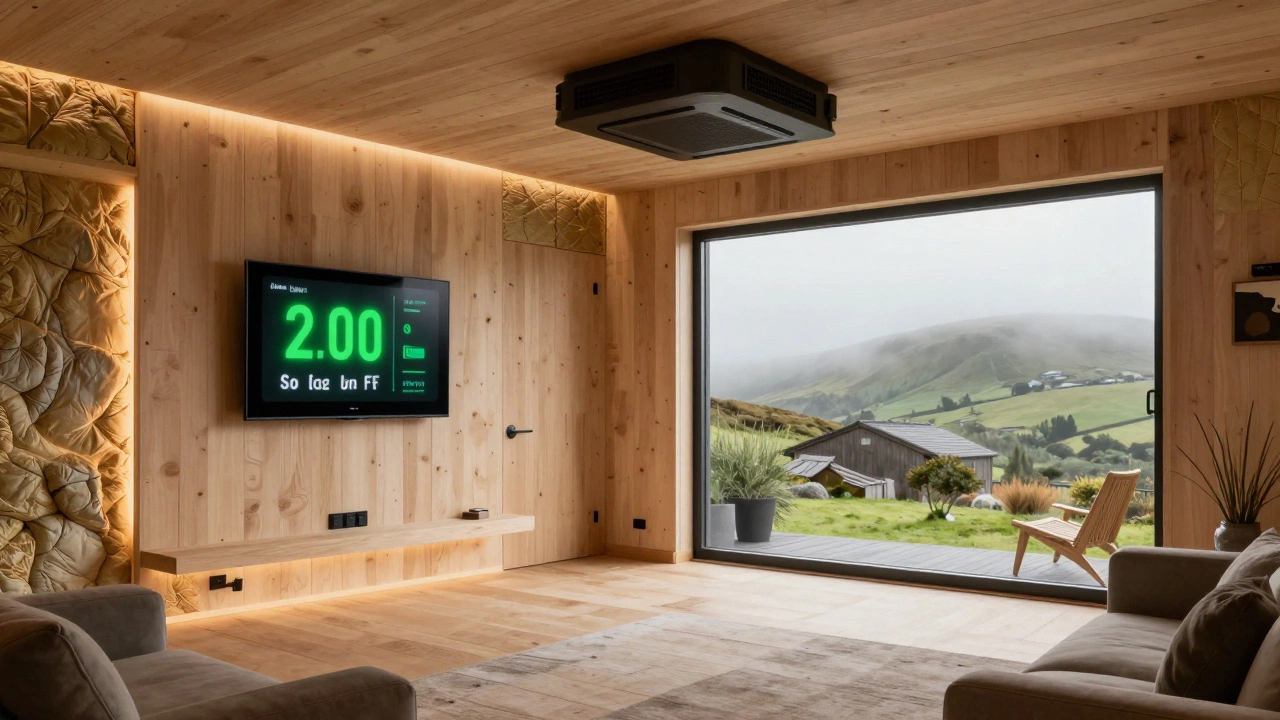
Used Eco-Homes: A Hidden Bargain
You don’t have to build from scratch. There’s a growing market for second-hand eco-homes in Ireland. Many were built between 2018 and 2023 under new building codes. These homes already have the certifications, the grants applied for, and the energy performance certificates (EPCs) showing A2 or A1 ratings.
On average, these homes sell for 10-15% more than comparable non-green homes. Sounds expensive? Here’s the twist: they sell faster. In Dublin and Galway, eco-certified homes are spending 30% less time on the market. Buyers are willing to pay more because they know they’re not buying a future energy bill.
And if you’re buying one? You’re getting a home that’s already been tested. No guesswork. No surprises. Just lower bills from day one.
Myth Busting: Green Doesn’t Mean Weird
A lot of people picture eco-homes as tiny, ugly, or full of weird gadgets. That’s not true anymore. Modern sustainable cottages look like any other modern home - maybe even better. Think clean lines, large windows, natural wood finishes, and open layouts. The difference is in what’s hidden: the insulation behind the walls, the heat pump under the floor, the solar panels on the roof that look like tiles.
One couple I spoke to in Wicklow built a 140m² cottage that looks like a traditional Irish farmhouse. Only difference? It produces 30% more energy than it uses. Their neighbors thought they were crazy - until they saw the electricity bill.
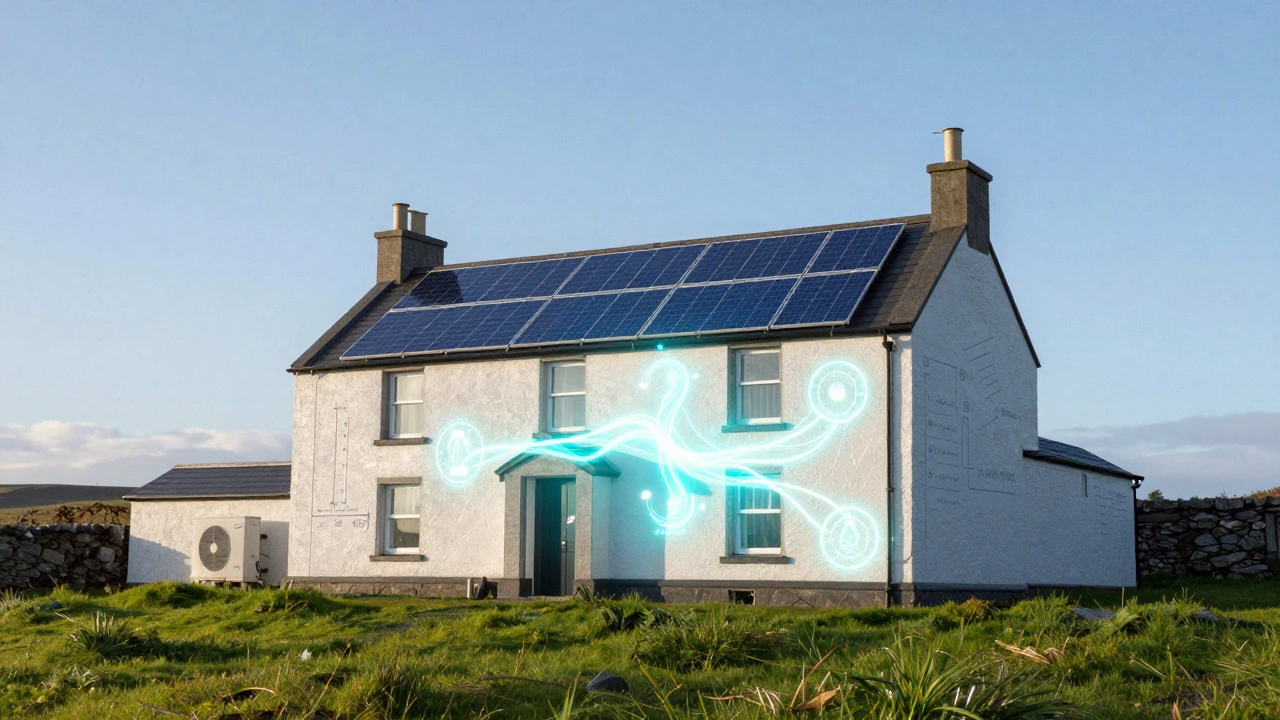
Who Should Go Green? Who Should Wait?
Not everyone needs to go all-in. Here’s a quick guide:
- Go green now if: You plan to live in the home for 10+ years. You want lower bills. You care about comfort (no cold spots, no drafts). You qualify for grants.
- Wait if: You’re building a short-term rental. You’re on a tight budget with no access to grants. You’re in a region with cheap gas and no incentives.
For most people in Ireland - especially those in rural areas where heating costs are high - going green isn’t a trend. It’s smart economics.
What’s Next? The Future of Eco-Homes
By 2030, all new homes in Ireland must be nearly zero-energy. That means the green premium will shrink. Materials will get cheaper. Installers will be more common. Right now, you’re paying for innovation. In five years, you’ll be paying for standard.
Waiting to build? You’re not saving money. You’re just delaying your savings.
Are eco-friendly houses really worth the extra cost?
Yes - if you plan to stay in the home for more than five years. The upfront cost is higher, but energy bills drop by 70-80%. In Ireland, most homeowners break even on the extra cost within 7-10 years. After that, it’s pure savings - plus better comfort and higher resale value.
Can I make an existing house eco-friendly without rebuilding?
Absolutely. Start with insulation, windows, and a heat pump. Many homeowners retrofit their cottages with 250mm wall insulation, triple-glazed windows, and a ground-source heat pump. These upgrades can cut energy use by 60%. SEAI grants cover up to 70% of the cost for low-income households and 40% for others. You don’t need to start from scratch.
Do eco-friendly homes sell for more?
Yes. In Ireland, homes with an A-rated EPC sell for 10-15% more than those with a D or E rating. Buyers know these homes have lower bills and fewer maintenance issues. In cities like Dublin and Cork, eco-homes are selling 30% faster than standard homes. The market is shifting - fast.
What’s the biggest mistake people make when building green?
Focusing only on solar panels. Solar looks impressive, but if your walls are poorly insulated or your windows leak air, you’re just wasting electricity. The real savings come from reducing energy demand first - through airtightness, insulation, and smart design. Solar is the cherry on top, not the foundation.
Are there eco-friendly homes available to buy now in Ireland?
Yes. There are hundreds of second-hand eco-cottages on the market, especially in counties like Clare, Galway, Wicklow, and Donegal. Many were built between 2019 and 2024 under new building regulations. Look for homes with an A2 or A1 EPC rating - these have already been certified and often come with grant paperwork already processed.