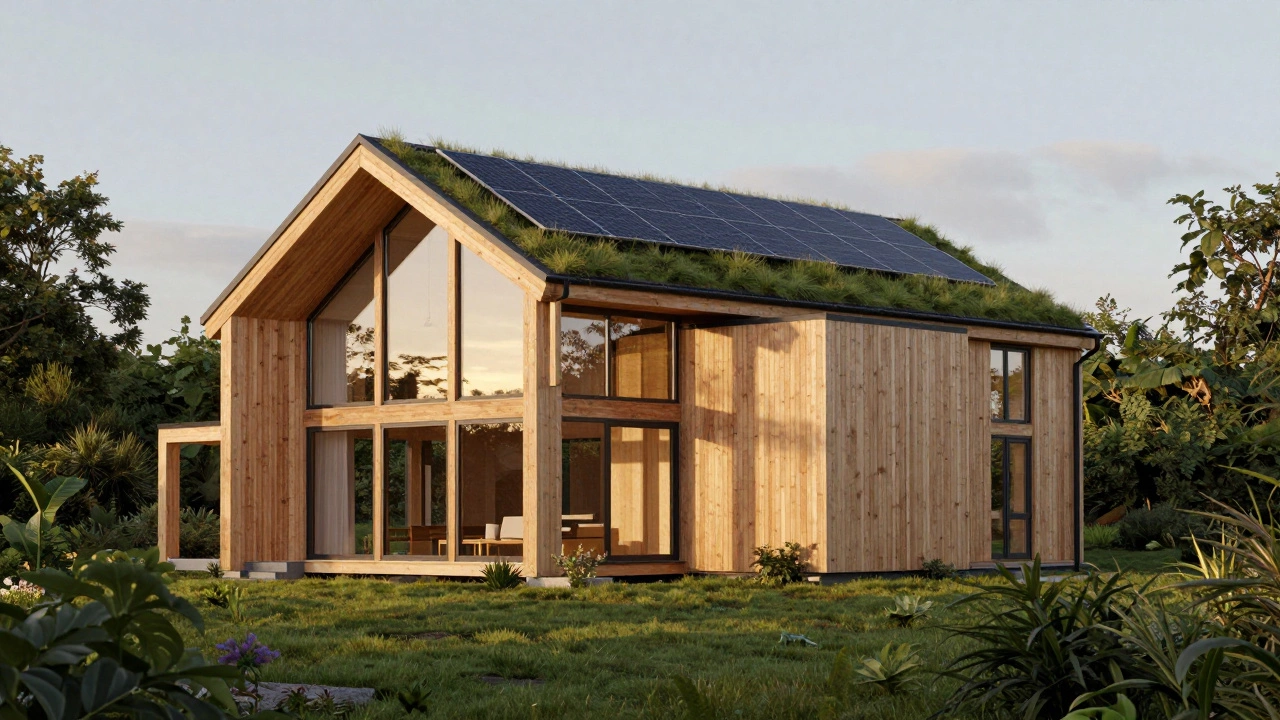
Sustainable Home Cost Estimator
Project Specifications
Cost Breakdown
£0 per m²
Building a fully sustainable house is no longer just a dream for environmentalists; it’s becoming the standard for smart homeowners. But when you sit down with your architect and ask for a quote, the number that comes back might make you blink twice. So, how much does it actually cost to build a fully sustainable house? The short answer: expect to pay between 15% and 40% more than a traditional build. In the UK and Ireland, where construction costs have risen sharply since 2023, a standard new home might set you back £2,500-£3,000 per square meter. A high-performance, net-zero ready home? You’re looking at £3,500-£5,000+ per square meter.
That premium sounds steep. But here’s the twist: those upfront costs are often offset by drastically lower energy bills, higher resale value, and government incentives that are evolving rapidly through 2026. If you’re planning an eco-friendly cottage or a modern sustainable home, understanding where that money goes-and how to stretch it-is crucial.
The Baseline: What Is a 'Fully Sustainable' House?
Before we talk numbers, let’s define what we mean. A "fully sustainable" house isn’t just one with solar panels on the roof. That’s greenwashing. True sustainability means the building operates as a closed-loop system wherever possible. It typically meets standards like Passive House (or Passivhaus), which focuses on super-insulation, airtightness, and heat recovery, or aligns with the latest UK Building Regulations Part L, which tightened significantly in 2025 to require nearly net-zero carbon homes.
Key attributes of this central entity include:
- Super-insulation: Walls, roofs, and floors insulated to R-values far exceeding code minimums.
- Airtightness: Less than 0.6 air changes per hour (ACH) at 50 Pascals, preventing drafts and heat loss.
- Heat Recovery Ventilation (HRV): Mechanical systems that recycle warm indoor air while bringing in fresh outdoor air.
- Renewable Energy Integration: Solar PV, heat pumps, or biomass systems sized to meet annual demand.
- Sustainable Materials: Low-carbon concrete, timber frames, recycled steel, and non-toxic finishes.
If you skip any of these, you aren’t building a fully sustainable house-you’re building a slightly greener conventional home. And that distinction matters for both performance and cost.
Breaking Down the Costs: Where Does the Money Go?
The 15-40% premium doesn’t come from nowhere. It’s distributed across several key areas. Let’s break them down with real-world estimates for a 150-square-meter (1,600 sq ft) home in 2026.
| Component | Traditional Build (£/m²) | Sustainable Build (£/m²) | Premium (%) |
|---|---|---|---|
| Foundation & Structure | £400 | £450 | 12% |
| Insulation & Envelope | £300 | £700 | 133% |
| HVAC & Ventilation | £250 | £600 | 140% |
| Windows & Doors | £200 | £450 | 125% |
| Renewable Energy Systems | £0 | £300 | N/A |
| Design & Certification | £100 | £200 | 100% |
| Total | £1,250 | £2,700 | 116% |
Note: These figures exclude land, labor variations, and interior finishes, which can also skew costs. For example, choosing reclaimed wood flooring over laminate adds aesthetic value but not necessarily performance.
1. Insulation & Envelope: The Biggest Jump
This is where the bulk of the premium lies. Traditional builds use standard cavity wall insulation and fiberglass batts. A sustainable home uses rigid foam boards, cellulose, sheep’s wool, or even aerogel in critical spots. Triple-glazed windows with argon gas fills replace double-glazed units. The result? A thermal envelope that holds heat like a thermos. Yes, it costs more upfront, but you’ll never need to crank up the boiler again.
2. HVAC & Ventilation: No More Drafts
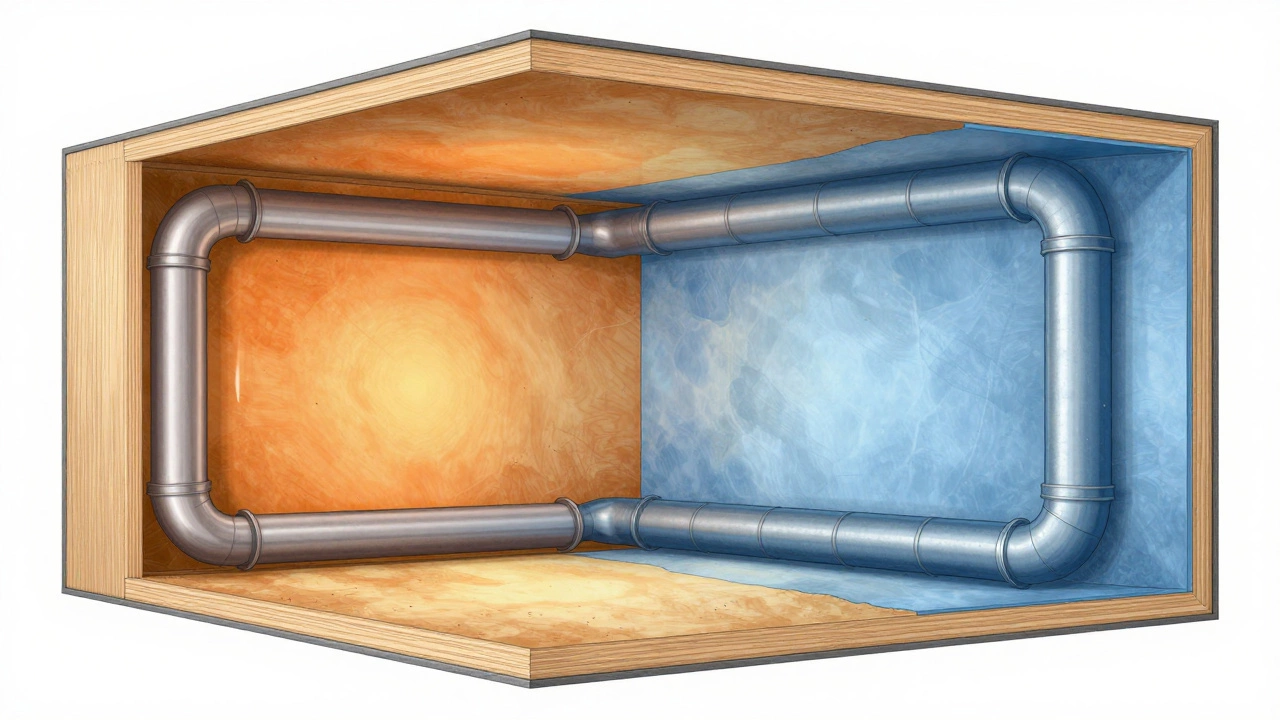
In a tightly sealed sustainable home, you can’t rely on natural ventilation. You need a Mechanical Ventilation with Heat Recovery (MVHR) system. This unit pulls stale air out of kitchens and bathrooms, passes it through a heat exchanger, and sends fresh, pre-warmed air into living spaces. Installation requires careful ductwork planning and skilled labor, adding £300-£400 per square meter compared to simple radiators and open windows.
3. Renewable Energy: Powering Your Home
Solar panels alone don’t cut it. You need a combination of rooftop PV, possibly a ground-source or air-source heat pump, and battery storage. In 2026, heat pumps are cheaper than ever due to EU subsidies, but installation complexity remains high. A full system-panels, inverter, battery, and heat pump-can run £20,000-£35,000 depending on size and efficiency.
Hidden Costs That Surprise Builders
Beyond the line items, there are less obvious expenses that catch first-time sustainable builders off guard.
- Certification Fees: Getting Passive House certification or meeting strict local codes requires third-party testing and documentation. Expect £2,000-£5,000 for blower door tests, thermal imaging, and consultant reviews.
- Skilled Labor Shortage: Not every contractor knows how to install continuous insulation without thermal bridging. You may need to hire specialists, who charge 20-30% more than general tradespeople.
- Material Lead Times: High-performance materials like triple-glazed windows or specific insulation types often have longer supply chains. Delays can inflate costs if you’re paying for extended site management.
- Design Complexity: Sustainable homes require integrated design from day one. Architects specializing in green building charge more because they’re solving complex problems-not just drawing walls.
Can You Cut Corners Without Sacrificing Sustainability?
Yes-but carefully. Here’s how to reduce costs without compromising core performance:
- Start Small: Aim for "Passive House Plus" rather than full certification. Meet the energy targets but skip some administrative hurdles.
- Choose Local Materials: Sourcing timber or stone locally reduces transport emissions and costs. Irish oak or Scottish pine can be just as effective as imported alternatives.
- DIY Where Possible: Interior finishes, landscaping, and even some insulation work can be done by owners with research and guidance.
- Phased Renovation: If building new isn’t feasible, retrofitting an existing cottage with external insulation, new windows, and a heat pump can achieve 80% of the benefits at half the cost.
The Long-Term Payoff: Why It’s Worth It
Let’s talk ROI. A fully sustainable house pays for itself over time through:
- Energy Savings: Up to 90% reduction in heating and cooling costs. In Ireland, where gas prices fluctuate wildly, this stability is priceless.
- Health Benefits: Better indoor air quality reduces allergies and respiratory issues. MVHR systems filter pollen, dust, and pollutants.
- Resale Value: Homes with EPC ratings of A or B sell faster and for 5-10% more than average properties. Buyers are increasingly aware of energy security.
- Future-Proofing: As regulations tighten, older homes will become harder to insure or sell. A sustainable home stays compliant for decades.
Consider this: If your traditional home costs £1,200/year in energy bills, and your sustainable home costs £120, you save £1,080 annually. Over 20 years, that’s £21,600-enough to cover much of the initial premium.
Government Incentives in 2026: Don’t Leave Money on the Table
Both the UK and Ireland offer grants that can significantly reduce your out-of-pocket expense.
- Ireland’s SEAI Grants: The Sustainable Energy Authority of Ireland offers up to €30,000 for heat pumps, insulation, and solar installations. Apply before starting work.
- UK Boiler Upgrade Scheme: Provides £7,500 toward switching from fossil fuel heating to low-carbon alternatives.
- Local Council Rebates: Many municipalities offer additional discounts for green building practices. Check with your local authority.
These programs change frequently, so verify eligibility early in your planning phase.
Real-Life Example: An Eco-Friendly Cottage in County Wicklow
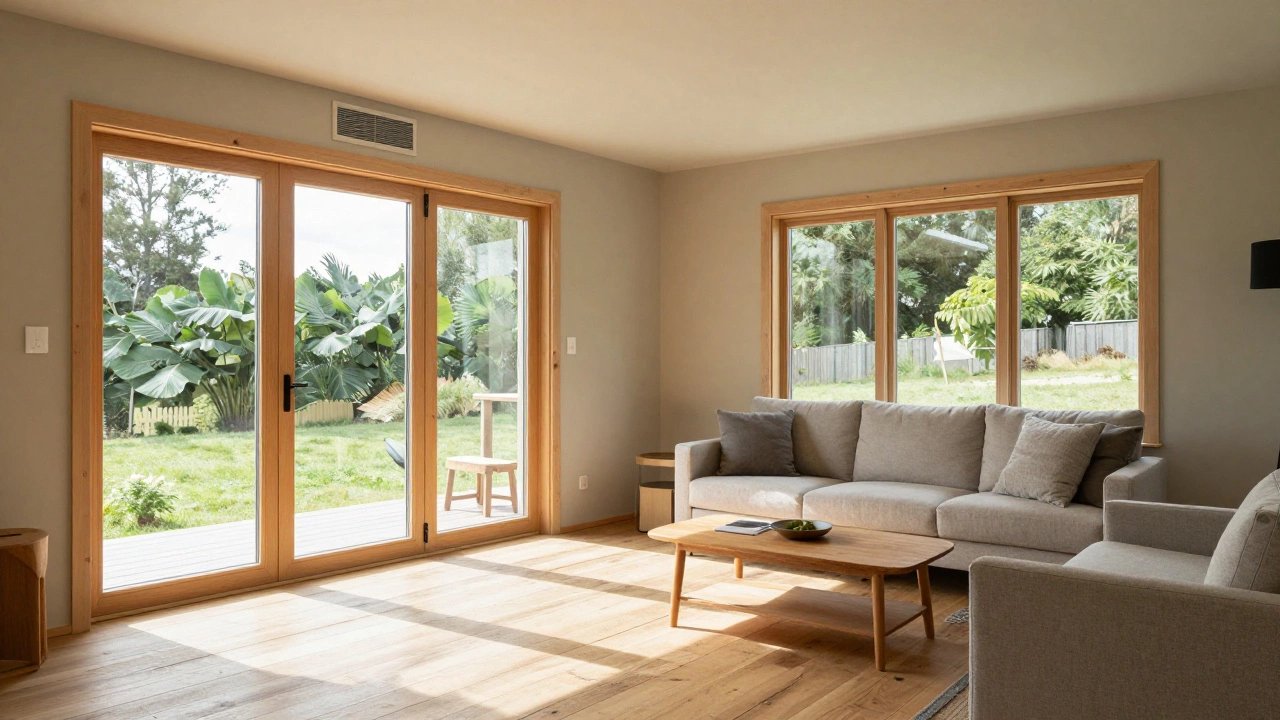
Last year, a couple built a 120-square-meter eco-cottage near Bray. They chose a timber frame, straw bale insulation, and a ground-source heat pump. Total cost: £480,000. Breakdown:
- Land: £150,000
- Construction: £250,000 (£2,083/m²)
- Systems (PV, Heat Pump, HRV): £60,000
- Contingency & Fees: £20,000
Compared to a similar-sized traditional home in the area (£350,000 total), they paid £130,000 more. But their predicted annual energy bill is under £100, versus £1,500 for neighbors. Within 15 years, they’ll break even. After that, pure savings.
Common Mistakes to Avoid
Don’t let enthusiasm blind you to practical pitfalls:
- Ignoring Site Orientation: South-facing windows maximize solar gain. North-facing designs waste potential free heat.
- Overcomplicating Design: Simple shapes reduce surface area and heat loss. Fancy angles increase cost and complexity.
- Skipping Air Tightness Testing: Even small gaps ruin performance. Test before closing walls.
- Underestimating Maintenance: Green roofs, solar panels, and heat pumps need regular upkeep. Budget for it.
Next Steps: How to Start Your Project
If you’re serious about building a sustainable home, follow this roadmap:
- Define Your Goals: Are you aiming for net-zero, carbon-neutral, or just lower bills? Set clear targets.
- Hire the Right Team: Look for architects and builders with LEED, BREEAM, or Passive House credentials.
- Get Quotes Early: Compare at least three contractors experienced in green building.
- Apply for Grants: Submit applications before breaking ground.
- Plan for Phases: If budget is tight, prioritize envelope and HVAC first, add renewables later.
Is it cheaper to retrofit an old house or build new sustainably?
Retrofitting is usually 30-50% cheaper than new construction, but achieving true sustainability is harder. New builds allow optimal orientation, material choice, and system integration. Retrofits often face structural limitations and higher labor costs for invasive upgrades like external insulation.
Do sustainable homes really last longer?
Yes. The tight envelope protects internal structures from moisture and temperature swings. Timber frames wrapped in breathable membranes resist rot better than brick-and-block exposed to condensation. Properly maintained, these homes can exceed 100-year lifespans.
What’s the biggest mistake people make when budgeting for a green home?
Underestimating soft costs. Design fees, certification, testing, and specialist labor often get overlooked. Always add a 15-20% contingency fund specifically for unforeseen technical challenges.
Can I finance a sustainable home differently?
Some banks offer "green mortgages" with lower interest rates for certified efficient homes. In Ireland, AIB and KBC have pilot programs. Ask lenders about ESG-linked loan products-they’re expanding rapidly in 2026.
Are sustainable materials durable enough?
Absolutely. Cross-laminated timber (CLT) is stronger than steel in compression. Hempcrete resists mold and fire. Recycled steel beams match virgin metal performance. Durability depends on proper installation, not just material type.