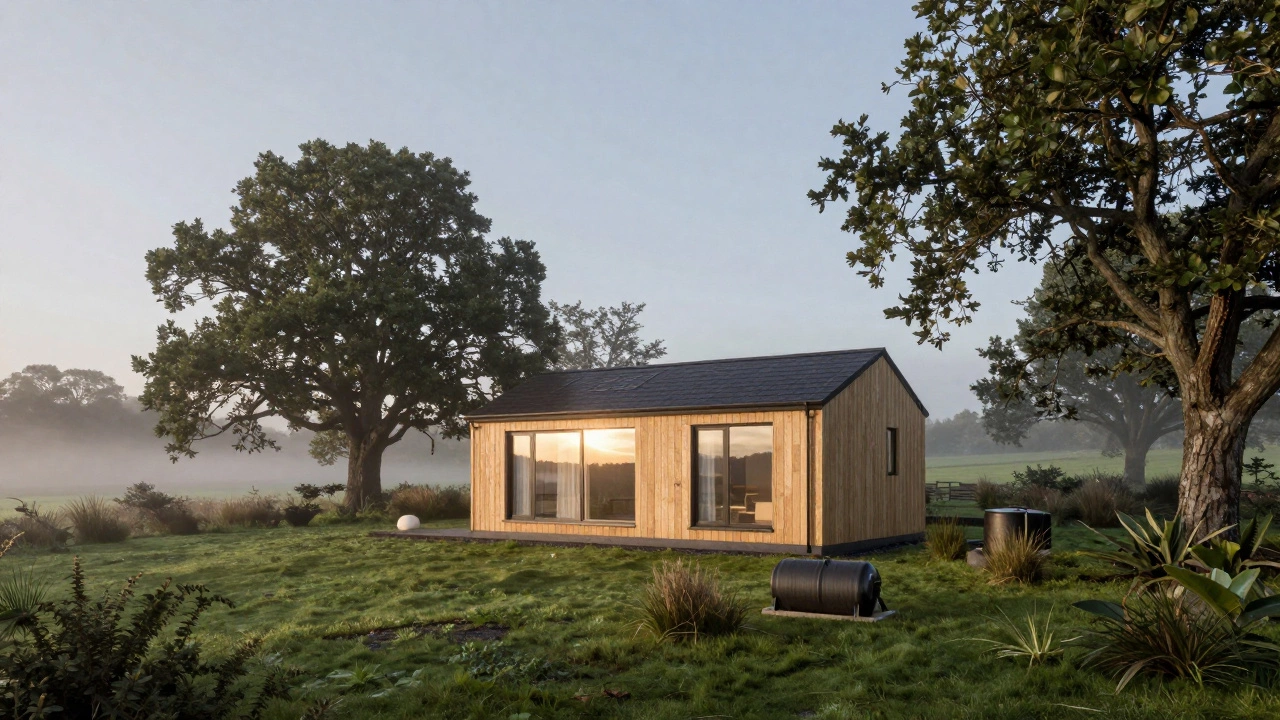
Eco-Cottage Cost & Savings Estimator
Upfront Investment
Long-Term Benefits (10 Years)
*Based on average 80% energy reduction and rising utility costs offset by eco-efficiency. Includes estimated government grant potential.
Building a home that doesn’t destroy the planet sounds like a noble goal, but it often feels like a logistical nightmare. You want low energy bills, healthy indoor air, and a small carbon footprint, yet you’re staring at a blank plot of land and a mountain of confusing jargon. The good news? Building an eco-friendly cottage is a residential structure designed to minimize environmental impact through sustainable materials, energy efficiency, and responsible site planning. It’s not about living in a cave or sacrificing comfort. It’s about being smarter with your resources.
I’ve spent years watching the construction industry shift from 'build big, heat it up' to 'build tight, think smart.' In Ireland, where rain is constant and winters are damp, this shift is even more critical. An eco-cottage isn't just a trend; it's a necessity for anyone who wants to future-proof their home against rising energy costs and stricter building regulations. Let’s break down exactly how you build one, step by step, without getting lost in the weeds.
Start with the Site and Orientation
Before you buy a single brick, look at the ground. The location of your cottage dictates its energy needs more than any appliance inside it. If you can, orient the long axis of your home east-west. This allows south-facing windows (in the Northern Hemisphere) to capture maximum solar gain during winter months. That free heat is worth thousands in fuel savings over the life of the building.
Consider the existing landscape. Do not clear-cut trees that provide natural windbreaks or shade. A mature oak tree on the west side of your property can reduce cooling loads in summer significantly. Also, check for water sources. Rainwater harvesting systems are easier to install when you plan for them from day one. You’ll need space for tanks and filtration, so factor that into your site layout early. Avoid building on wetlands or floodplains-not just for legal reasons, but because disturbed ecosystems rarely recover fully.
Choose Sustainable Building Materials
The materials you choose define the health of your home and its carbon footprint. Traditional concrete and steel have high embodied energy-the total energy required to extract, process, and transport materials. To lower this, look for local, renewable, or recycled options.
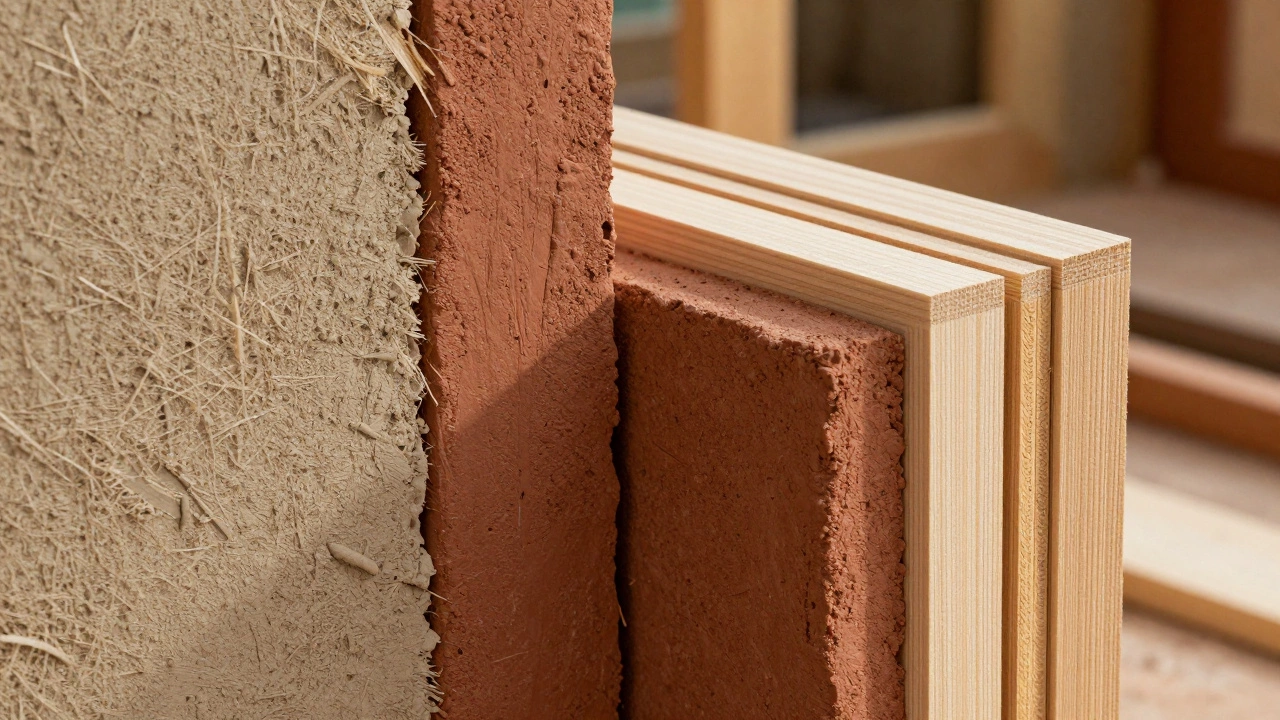
- Hempcrete: A mixture of hemp hurds and lime binder. It’s lightweight, breathable, and carbon-negative, meaning it absorbs more CO2 during growth than is emitted during production. Perfect for wall infill.
- Rammed Earth: Compacted soil stabilized with a small amount of cement or lime. It provides excellent thermal mass, keeping interiors cool in summer and warm in winter. It looks stunning and lasts centuries.
- Cross-Laminated Timber (CLT): Engineered wood panels that are strong enough for multi-story buildings. Wood stores carbon, making CLT a greener alternative to steel frames. Ensure the timber comes from sustainably managed forests (look for FSC certification).
- Recycled Steel: If you must use steel, ensure it’s recycled. Steel is infinitely recyclable without losing strength.
Avoid materials with high volatile organic compounds (VOCs). Cheap paints, adhesives, and particleboards off-gas chemicals that degrade indoor air quality. Opt for natural finishes like clay plaster, milk paint, or linseed oil. Your lungs will thank you.
| Material | Carbon Footprint | Thermal Performance | Durability |
|---|---|---|---|
| Hempcrete | Negative (absorbs CO2) | High insulation, low thermal mass | High (if protected from moisture) |
| Rammed Earth | Low | Low insulation, high thermal mass | Very High |
| CLT (Timber) | Low (stores carbon) | Moderate | High |
| Concrete | Very High | Low insulation, high thermal mass | Very High |
Design for Passive Efficiency
An eco-friendly cottage relies on 'passive' strategies first, mechanical systems second. Passive House standards, originating in Germany, offer a blueprint for extreme efficiency. The core idea is simple: keep the heat in (or out) without using much energy.
This starts with super-insulation. Standard walls might have R-values of 20-30. Aim for R-40 or higher in your walls and roof. Use continuous insulation to avoid thermal bridges-spots where heat escapes easily, like around window frames or floor joists. Air sealing is equally important. A leaky house is an expensive house. Use tape, gaskets, and careful detailing to create an airtight envelope.
Windows are your biggest vulnerability. Triple-glazed windows with argon gas fills and low-E coatings are non-negotiable for high-performance homes. They let light in but block heat transfer. Position them strategically: large on the south, minimal on the north.
Integrate Renewable Energy Systems
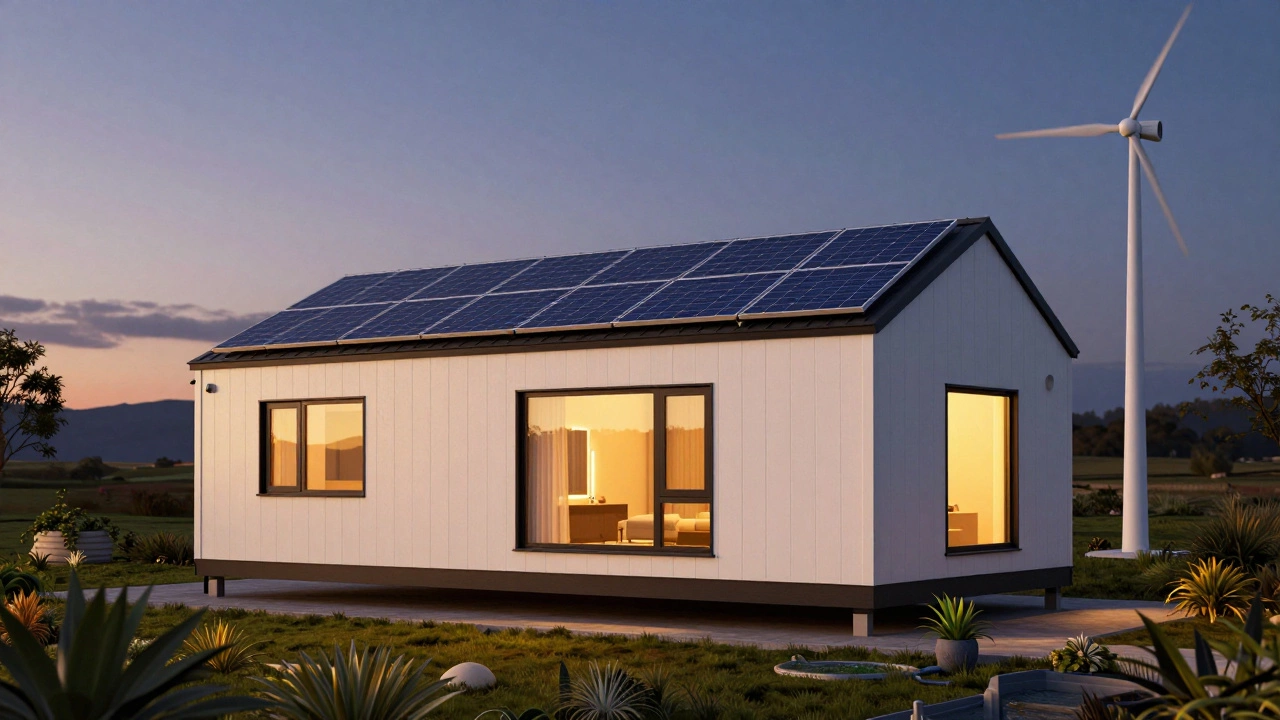
Once your shell is efficient, you need to generate power. Solar photovoltaic (PV) panels are the standard choice. In 2026, panel efficiency has improved, and costs have dropped, making them viable for most budgets. Size your system to cover your annual consumption, not just peak usage. Pair it with a battery storage system if you want true energy independence.
For heating and hot water, consider an air-source or ground-source heat pump. These systems move heat rather than creating it, achieving coefficients of performance (COP) of 3-4. That means for every 1 kWh of electricity used, you get 3-4 kWh of heat. Much better than electric resistance heaters or oil boilers.
If you’re in a windy area, a small vertical-axis wind turbine can supplement solar power, especially in winter when sunlight is scarce. However, noise and zoning restrictions can be hurdles, so check local regulations first.
Water Conservation and Waste Management
Water is precious. Install low-flow fixtures everywhere: showerheads, toilets, and faucets. A dual-flush toilet saves gallons per day. Greywater systems recycle water from sinks and showers for irrigation or toilet flushing. This reduces your demand on municipal supplies or septic systems.
For sewage, a composting toilet eliminates the need for a septic tank entirely. It turns waste into usable compost (after proper treatment) and uses no water. It’s a bold choice, but effective for off-grid cottages. For those less adventurous, an aerobic septic system is more environmentally friendly than traditional anaerobic ones.
Cost Considerations and ROI
Let’s address the elephant in the room: cost. Building an eco-friendly cottage typically costs 5-10% more upfront than a conventional build. Why? Specialized materials, labor skilled in new techniques, and high-performance components like triple glazing.
However, the return on investment (ROI) is substantial. Energy bills drop by 70-90%. Maintenance costs are lower due to durable materials. Plus, government incentives in many regions, including Ireland’s SEAI grants, can offset initial costs. Resale value is also increasing as buyers prioritize sustainability. Think of the extra cost as paying off your mortgage faster through utility savings.
Common Pitfalls to Avoid
Even well-intentioned builders make mistakes. Here are the top three to watch out for:
- Ignoring Moisture Management: Breathable materials like hempcrete need vapor-permeable finishes. Sealing them with impermeable paint traps moisture, leading to mold. Understand the hygrothermal properties of your materials.
- Underestimating Ventilation: Airtight homes need mechanical ventilation with heat recovery (MVHR). Without it, stale air builds up, causing health issues. Don’t skip this system.
- Cherry-Picking Features: Adding solar panels to a leaky, uninsulated house is like putting a fancy engine in a car with flat tires. Focus on the building envelope first. Efficiency before generation.
Building an eco-friendly cottage is a journey, not a sprint. It requires research, patience, and a willingness to challenge conventional norms. But the result is a home that respects the planet, protects your health, and saves you money. Start small, plan carefully, and don’t be afraid to ask questions. The future of housing is green, and you can be part of it.
How much does it cost to build an eco-friendly cottage?
The cost varies widely based on location, size, and materials. Generally, expect to pay 5-10% more than a conventional build. In Ireland, this might range from €2,000 to €3,500 per square meter for high-performance builds. However, government grants and long-term energy savings can offset these initial costs significantly.
What are the best materials for an eco-friendly cottage?
Top choices include hempcrete for insulation and carbon sequestration, rammed earth for thermal mass and durability, and cross-laminated timber (CLT) for structural strength. Always prioritize locally sourced materials to reduce transportation emissions.
Can I build an eco-friendly cottage off-grid?
Yes, absolutely. Off-grid living requires robust solar PV systems, battery storage, rainwater harvesting, and composting toilets. It demands careful planning to ensure reliability, especially during periods of low sunlight or heavy rainfall.
Do eco-friendly cottages require special maintenance?
Not necessarily. Many natural materials like rammed earth and stone are extremely durable and require little upkeep. However, systems like MVHR filters need regular cleaning, and solar panels should be checked annually for debris or damage.
Is it difficult to find builders experienced in eco-construction?
It can be challenging, but the pool of skilled eco-builders is growing. Look for contractors certified in Passive House standards or those with portfolios of sustainable projects. Training programs and workshops are also becoming more common.