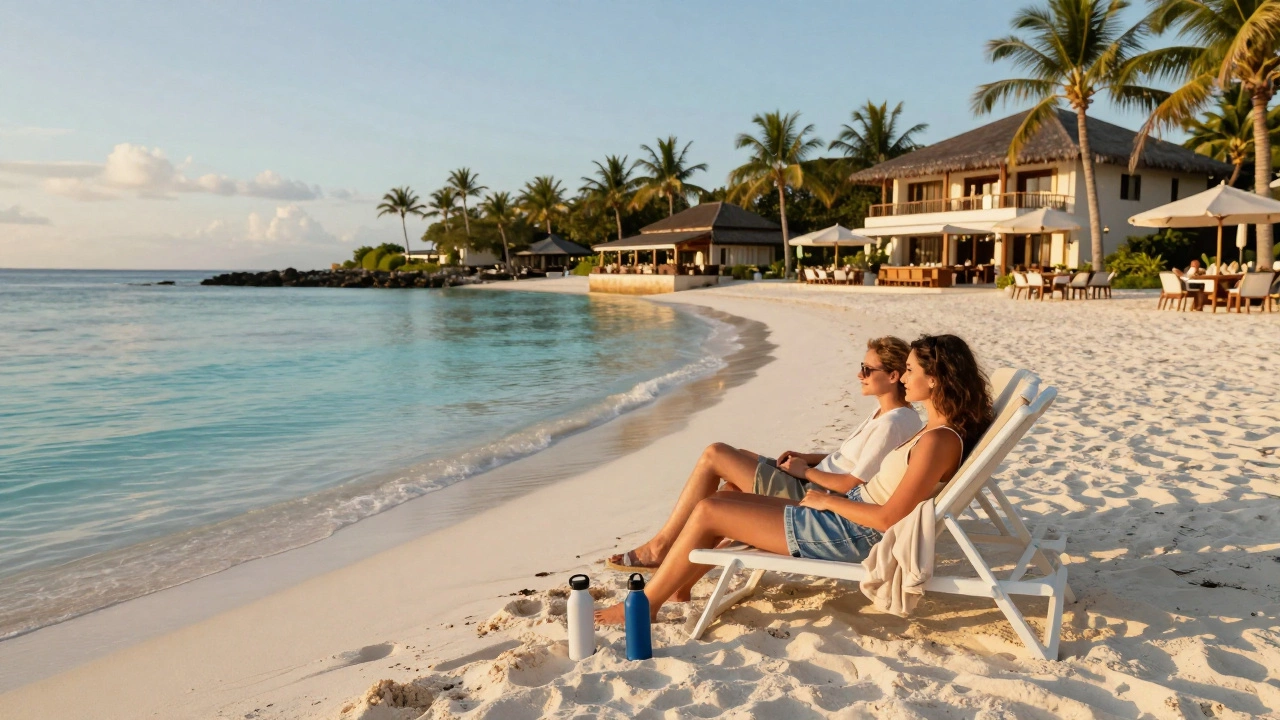
All-Inclusive Resort Cost Calculator
Calculate Your Trip Costs
Cost Breakdown
Enter your trip details to see the breakdown.
If you’ve ever booked an all-inclusive resort and ended up paying extra for everything from water to Wi-Fi, you’re not alone. The promise of "everything included" sounds perfect-until you’re handed a bill for the shrimp cocktail or charged $12 for a cocktail that was supposed to be free. Finding a real all-inclusive resort isn’t about picking the prettiest photo on Instagram. It’s about knowing what’s actually covered, where the hidden costs hide, and which places deliver on their promises.
Start with what’s really included
Not all "all-inclusive" means the same thing. Some resorts include only basic drinks-cheap beer, soda, and house wine. Others offer premium liquors, imported spirits, and specialty cocktails. Some include meals at one or two restaurants; others give you access to 10+ dining spots, including sushi bars, steakhouses, and 24-hour room service.Look for resorts that list their inclusions clearly. Good ones will say: "Unlimited premium alcoholic beverages," "All meals at all on-site restaurants," "Non-motorized water sports," and "Daily activities like yoga and snorkeling." If they just say "all-inclusive" without details, assume the worst.
For example, Sandals resorts in Jamaica include top-shelf rum, tequila, and wine with every meal. They also include scuba diving, kayaking, and even airport transfers. Compare that to a budget resort that includes only local beer and one sit-down dinner. The price might look similar, but the value? Not even close.
Check the food and drink options
A resort with one buffet and one restaurant won’t cut it if you’re staying a week. You’ll get tired of the same grilled chicken and pasta every night. Look for resorts with at least three dining venues-preferably with different cuisines. Thai, Italian, Mexican, seafood, and a steakhouse give you variety without leaving the property.Drink quality matters too. If they only serve "house brand" rum or wine, ask what brand it is. Some places use private-label products that taste like rubbing alcohol. Top resorts use recognizable names: Patron tequila, Johnnie Walker, Moët & Chandon. You can often find this info on their website under "Dining & Beverages." If they don’t list it, call them. Ask: "Is the rum included Grey Goose or just a local blend?"
Location and beach access aren’t optional
An all-inclusive resort on a busy street with a muddy patch of sand isn’t worth the price. You’re paying for relaxation. Make sure the beach is clean, wide, and actually part of the resort. Some places claim "beachfront" but have a 10-minute walk across a parking lot to reach the water.Check Google Street View. Look at the shoreline. Is it packed with umbrellas? Are there rocks or seaweed covering the sand? Are there other resorts blocking the view? A good beach should have soft sand, clear water, and enough space to spread out without elbowing strangers.
Also, consider the surrounding area. If you’re in Mexico, is the resort in a safe zone like Playa del Carmen or Tulum? Or is it isolated in a place where you can’t walk anywhere without a taxi? Resorts in safe, walkable areas often have better food, more activities, and less risk.

Read recent reviews-not just star ratings
Star ratings lie. A resort with 4.7 stars might have 500 reviews, but if 80% are from people who stayed in 2019, they’re not useful. Look for reviews from the last six months. People who stayed in 2025 will tell you if the food has gone downhill, if the Wi-Fi is still broken, or if they’re now charging for sunscreen.Search for keywords in reviews: "hidden fees," "overpriced," "staff rude," "closed restaurant," "no towels," "broken AC." These tell you more than a five-star rating. Also, look for photos uploaded by guests-not the resort’s marketing shots. Real photos show the actual pool, the real beach, the actual room.
One traveler in Cancún wrote: "They advertised unlimited drinks, but the bar ran out of gin every night at 8 PM. We had to pay $15 for a cocktail after that." That’s the kind of detail that saves you.
Watch out for the "upcharge traps"
Even good resorts have sneaky add-ons. Here’s what they’ll try to charge you for:- Specialty coffee (espresso, cappuccino)
- Room service after 11 PM
- Snorkeling gear rentals
- Spa treatments (even basic massages)
- Children’s club (yes, some charge for kids’ activities)
- Wi-Fi (yes, really)
Some resorts include these. Others don’t. Before you book, read the fine print. If it’s not listed as included, assume it costs extra. A resort that includes everything-even coffee and Wi-Fi-is rare but worth the extra cost.
For example, Secrets Resorts in the Caribbean include unlimited premium drinks, 24-hour room service, and high-speed Wi-Fi. They also offer a free daily spa credit. That’s the kind of resort you want.
Book direct, not through third parties
Booking through Expedia or Booking.com might look cheaper, but you lose leverage. If the resort cancels your dinner reservation or gives you a dirty room, the third-party site won’t help. You’ll be stuck calling a call center in another country.Book directly through the resort’s website. You’ll get the same price, often with perks like free room upgrades, early check-in, or a welcome drink. Plus, if something goes wrong, you can call the front desk directly. They’ll fix it because they want you to come back.
Also, sign up for their email list. Resorts often send exclusive deals to subscribers-like free nights, meal credits, or spa discounts. You won’t find those on third-party sites.
Timing matters
All-inclusive resorts are cheapest during shoulder seasons. In the Caribbean, that’s late April to mid-June and September to November. Avoid December to March-peak season means double the price and triple the crowds.Book at least 3 months ahead if you want a good room. The best beachfront bungalows or ocean-view suites sell out fast. Last-minute deals exist, but they’re usually for rooms with bad views or noisy locations.
Also, check for promotions. Some resorts offer "kids stay and eat free" or "free anniversary upgrades." These aren’t advertised on Google. You have to ask.
What to pack (and what to leave at home)
You don’t need much. Most resorts provide towels, sunscreen, shampoo, and even flip-flops. But here’s what you should bring:- Reusable water bottle (some resorts have filtered water stations)
- Light jacket for cooler evenings
- Good walking shoes (for exploring the property)
- Small daypack for excursions
- Travel adapter (if you’re from the U.S. and going to Europe or Asia)
Leave behind: expensive jewelry, too many clothes, and your laptop. You’re there to relax, not work.
Final checklist before you book
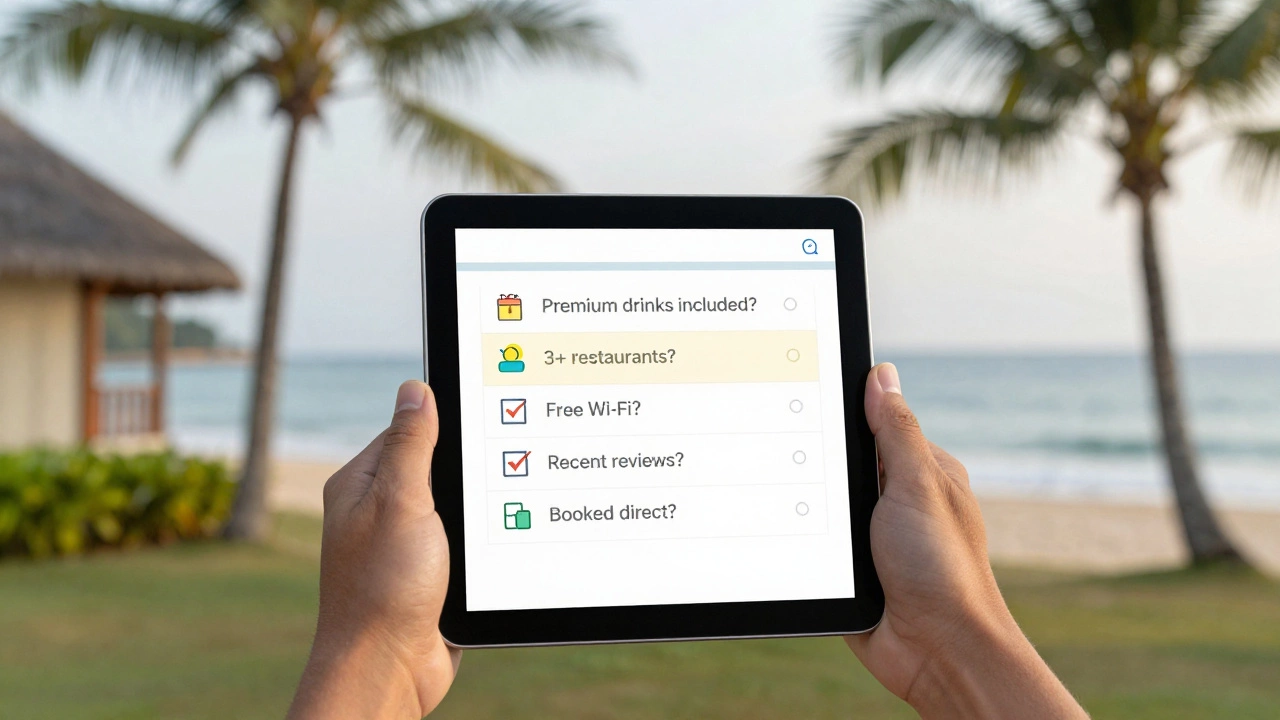
Use this quick list to avoid bad choices:- Does the resort list exactly what’s included? (No vague "all-inclusive" claims)
- Are there at least 3 dining options with real variety?
- Is the beach clean, wide, and actually on the property?
- Are premium drinks included? (Ask for brand names)
- Is Wi-Fi, coffee, and room service free?
- Are reviews from the last 6 months mostly positive?
- Did you book directly with the resort?
If you answered yes to all of these, you’ve found a good one. You won’t get everything for free-but you’ll get what matters: real value, real relaxation, and no surprises.
Are all-inclusive resorts worth it for families?
Yes, if you pick the right one. Resorts like Beaches in Jamaica or Club Med in the Caribbean have kids’ clubs, water parks, and family-friendly meals. Many include free childcare, so parents can relax. But avoid resorts that charge extra for kids’ activities or have no dedicated family zones. Look for ones with separate pools, kids’ menus, and babysitting services included.
Can I find a good all-inclusive resort under $200 a night?
It’s possible, but you’ll trade comfort for price. Resorts in the Dominican Republic or Mexico’s Riviera Maya can hit $180-$200 in shoulder season. But expect basic rooms, limited dining options, and lower-quality drinks. You won’t get premium liquor, multiple restaurants, or daily activities included. If you’re on a tight budget, go for it-but know what you’re giving up.
What’s the difference between all-inclusive and ultra-all-inclusive?
Ultra-all-inclusive means premium everything: top-shelf alcohol, gourmet meals at every restaurant, no extra fees for anything-even spa credits or excursions. Brands like Secrets, Excellence, and Sandals offer this. Regular all-inclusive might include only house-brand drinks and two restaurants. The price gap can be 30-50%, but the experience is worlds apart.
Do all-inclusive resorts have good food?
Some do, some don’t. It depends on the resort’s management. High-end resorts hire real chefs and source local ingredients. Budget ones use frozen food and overcook everything to save money. Look for resorts that mention farm-to-table, local seafood, or chef-led dining. Check guest photos of meals-real food looks different than stock images.
Is it safe to stay at an all-inclusive resort in Mexico?
Yes, if you stay in the tourist zones like Cancún, Playa del Carmen, or Tulum. These areas have private security, gated resorts, and are far from high-risk areas. Avoid resorts in border towns or places like Tijuana. Stick to well-known brands with good reputations. Most resorts provide shuttles and won’t let you leave without a guide if you’re not familiar with the area.
If you’re ready to relax without worrying about your wallet, focus on the details-not the price tag. A good all-inclusive resort doesn’t just include meals and drinks. It includes peace of mind. And that’s worth more than any discount.