Country Cottage Color Palette Generator
Wall Color Selection
Color Result
Tip: Country cottages embrace imperfections. Notice how our color samples have subtle texture variations to match real-world charm.
Ever walk through a village and stop dead in your tracks because a house looks like it stepped out of a storybook? That’s the country cottage vibe-warm, lived-in, and full of charm. You don’t need a thatched roof or a cottage in the Cotswolds to bring that feeling home. It’s about layers, texture, and a little bit of quiet rebellion against sleek modernity. If you want your house to feel like a country cottage, start by forgetting perfection. This isn’t about matching sets or spotless surfaces. It’s about comfort that feels earned.
Start with the walls
Paint is your first and cheapest tool. Skip the white-on-white trend. Country cottages have walls that breathe. Think soft greys, milky whites, faded blues, or even a hint of sage. Lime wash is traditional in the UK and Ireland-it gives a chalky, uneven finish that catches the light just right. If you’re not ready to repaint everything, try one feature wall. An old fireplace surround or a hallway nook painted in a muted ochre can instantly shift the mood.
Don’t be afraid of imperfection. Faded paint, slight brush strokes, even a tiny chip near the baseboard? That’s not a flaw. It’s character. Real cottages weren’t built to be Instagrammable. They were built to last through rain, wind, and generations of kids running through the halls.
Furniture that tells a story
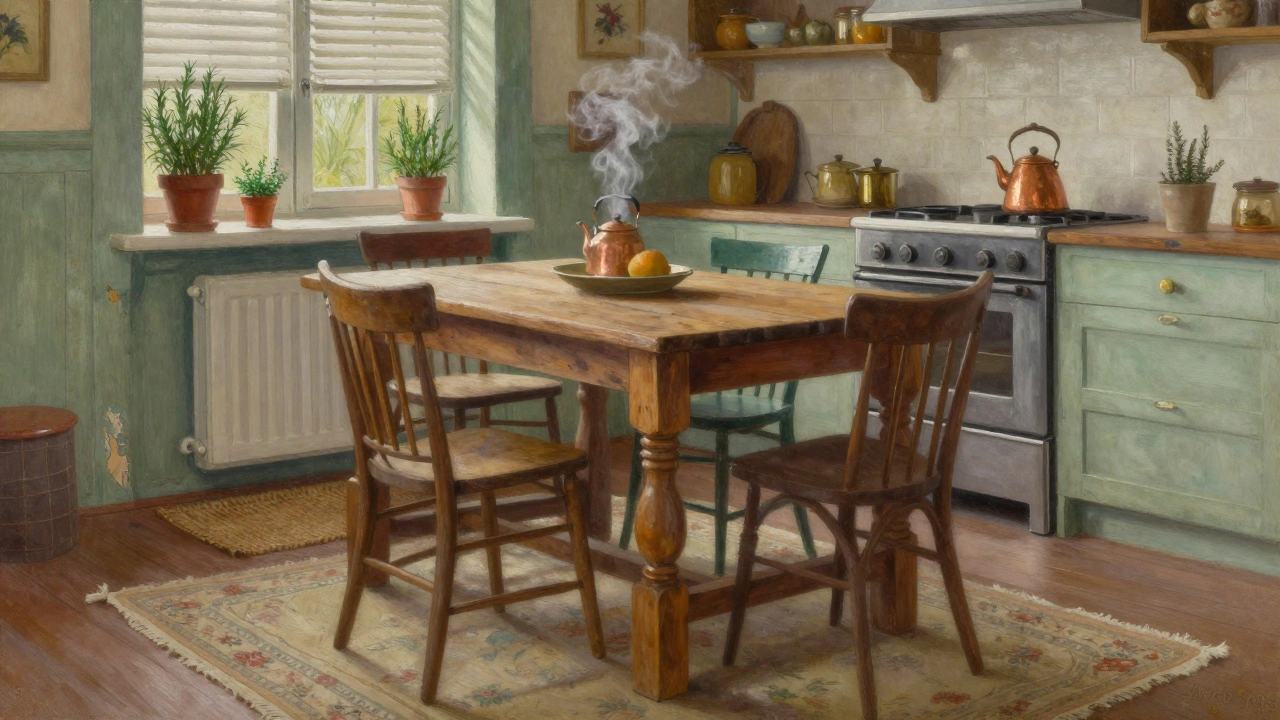
Forget matching sets. Country cottages are full of mismatched chairs, wobbly side tables, and armchairs that sag just right. Look for pieces with history. An old wooden dining table with carved legs, a Victorian chest with tarnished brass handles, or a child’s rocking horse turned into a side table-all of these add soul.
Thrift stores, flea markets, and even barn sales are your best friends. A wooden chair with a woven rush seat, a wrought iron bed frame from the 1920s, or a dresser painted in faded green-these aren’t just furniture. They’re fragments of another life. Clean them up gently. Don’t strip them bare. Let the patina stay. That worn edge on the table? That’s where a hundred breakfasts were eaten.
Textiles that hug you
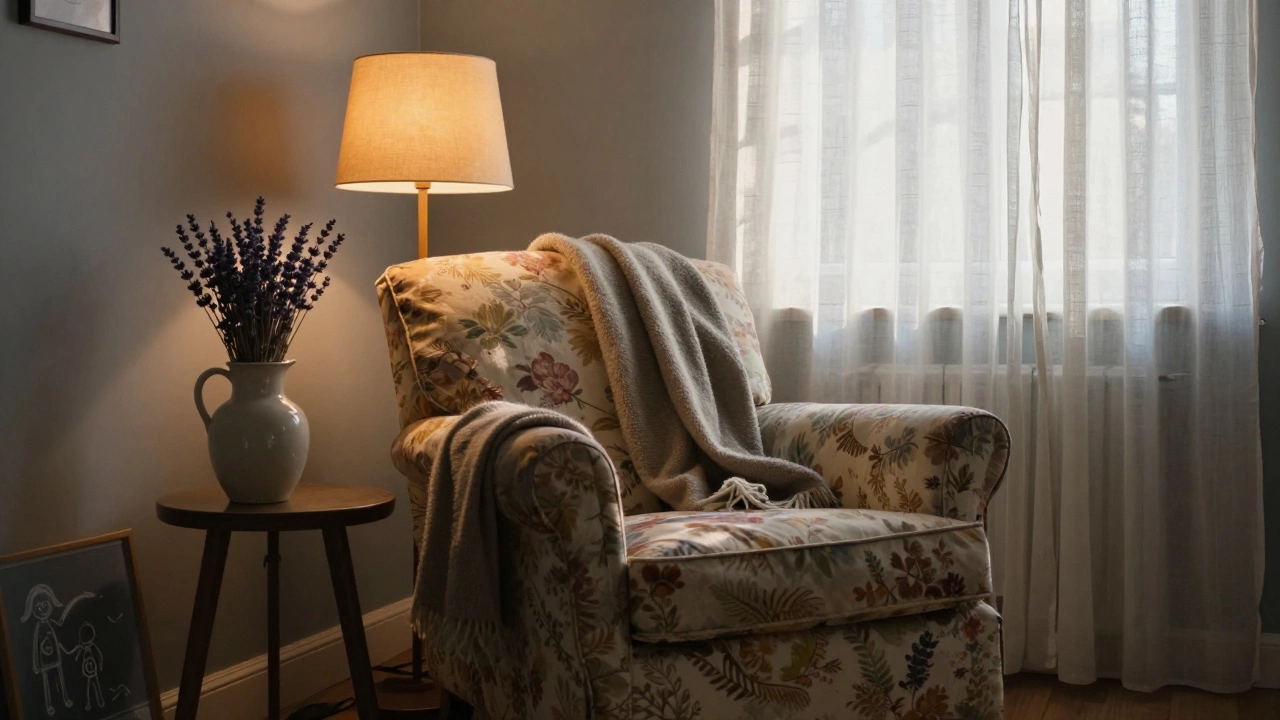
Texture matters more than color. Think wool blankets draped over a sofa, linen curtains that flutter in the breeze, and cotton rugs that feel soft under bare feet. Layer them. A jute rug under a faded floral one. A knitted throw on top of a velvet cushion. Don’t worry about patterns clashing. A checked cushion next to a striped curtain? That’s the point.
Floral prints are classic, but don’t go overboard. One or two pieces with small, muted florals-think daisies, lavender, or ivy-are enough. Avoid shiny fabrics. Satin and polyester scream modern. Stick to natural fibers: cotton, wool, linen, and hemp. They age gracefully. They smell like sunshine when they’re out on the line.
Windows that frame the world
Cottage windows aren’t about views. They’re about light. Keep them simple. Sheer curtains let the morning sun pour in. If you have shutters, great. If not, try wooden blinds painted white or a soft linen panel tied back with twine. Avoid heavy drapes. They weigh the room down.
Keep the sills clear of clutter… unless it’s a collection of old jars, a potted rosemary plant, or a stack of well-loved books. That’s not clutter. That’s a quiet life. Add a small window box with thyme or pansies in spring. Even a single pot of lavender on the sill can change the whole feel of a room.
Lighting that glows
Harsh overhead lights kill the cottage vibe. Go for warm, low light. Table lamps with fabric shades, wall sconces with frosted glass, or even a few candles on a sideboard. Choose bulbs with a soft yellow glow-2700K or lower. Avoid LEDs that look like fluorescent tubes.
Find old lanterns or mason jars with fairy lights inside. Hang them above a bed or along a porch. You don’t need to spend much. A string of vintage-style bulbs from a hardware store, wired to a dimmer switch, can turn a plain hallway into a warm corridor from another time.
Bring the garden inside
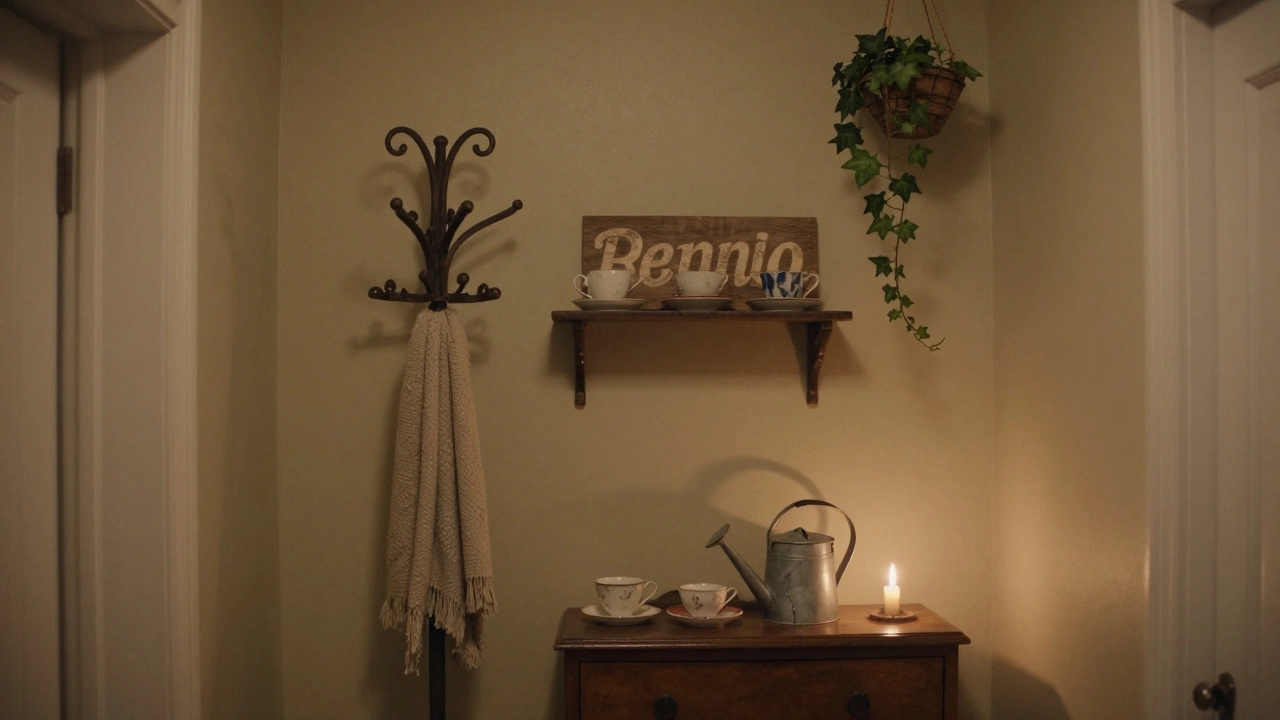
Country cottages don’t just have gardens. They breathe with them. Bring plants inside. A bowl of eucalyptus on the bathroom counter. A cluster of potted herbs on the kitchen windowsill. A trailing ivy in a hanging basket near the door.
Use ceramic pots with chips and cracks. Don’t fix them. They’re part of the story. A cracked watering can, a rusted trowel leaning by the back door-these aren’t tools. They’re relics of quiet rituals.
Even if you have no outdoor space, a single windowsill herb garden can make a difference. Rosemary, mint, and thyme smell like countryside air. Keep them near the sink so you brush past them every day.
Details that whisper
It’s the small things that stick. A ceramic bowl full of pinecones in winter. A hand-painted sign that says “Tea” above the kettle. A shelf with mismatched teacups, each with a different pattern. A wooden sign with a faded quote: “Home is where the heart is.”
Use real ceramics, not mass-produced decor. A hand-thrown mug, a ceramic jug from a local potter, a wooden spoon carved by someone’s grandparent. These aren’t decorations. They’re memories waiting to be made.
Don’t buy a “cottage style” kit from a big-box store. That’s not authenticity. That’s a costume. True country cottage charm comes from collecting-over time, slowly, with intention.
Let it grow
This isn’t a project you finish in a weekend. It’s a habit. One old rug each season. One new plant each spring. One repaired chair each winter. A country cottage isn’t designed. It’s lived in.
Leave the front door open on warm days. Let the breeze carry in the scent of cut grass. Let the dog sleep on the rug by the fire. Let the kids draw on the wall with chalk. That’s the real secret. It’s not about the paint or the curtains. It’s about letting your life settle into the space. The charm isn’t in the furniture. It’s in the quiet moments that happen because the house feels like a hug.
Can I make my modern house look like a country cottage?
Absolutely. Country cottage style isn’t about architecture-it’s about feeling. Even a sleek, contemporary home can feel warm and cozy with the right textures, colors, and layers. Start with paint, lighting, and textiles. Swap out harsh lighting for soft lamps. Add wool throws, linen curtains, and mismatched furniture. Over time, collect pieces with history. You don’t need to renovate. You just need to slow down and let comfort lead.
What colors work best for a country cottage interior?
Soft, muted tones are key. Think cream, faded sage, dusty blue, warm grey, and buttery yellow. Avoid bright whites or stark neutrals. Lime wash or whitewash on walls gives a soft, uneven texture that feels old and lived-in. For trim, use a slightly warmer white than the walls to create depth. Paint samples on the wall and live with them for a few days. The best color is the one that feels like sunlight on a rainy afternoon.
Do I need a garden to get the country cottage look?
No. But bringing elements of the garden inside helps. A few potted herbs, a single flowering plant on the windowsill, or even dried lavender in a jar can connect your space to nature. If you have no outdoor area, focus on natural materials-wood, stone, linen, and wool. Let light in. Keep things simple. The feeling of a cottage comes from calm, not space.
How do I avoid making it look like a theme park?
Don’t buy matching sets. Don’t use plastic flowers. Avoid anything that looks like it came from a catalog labeled “Cottage Core.” Real country cottages are messy, uneven, and personal. Collect things over time-antique teacups, a handmade quilt, a wooden sign from a roadside shop. Let things age. Let dust settle. Let your pets leave fur on the sofa. Authenticity isn’t curated. It’s lived.
What’s the biggest mistake people make trying to create this look?
Trying to do it all at once. You can’t transform a space into a country cottage in a weekend. It takes years. The biggest mistake is rushing. Buying a whole set of “cottage decor” online. That’s not charm-that’s decoration. Real charm comes from slow accumulation: a chair found at a garage sale, a rug that’s worn thin in the middle, a window box that survived last winter. Let time do the work.