Eco-Friendly Building Material Selector
Select Construction Element
Select a construction element to see eco-friendly alternatives
When you think of building a cozy cottage in the woods, you probably imagine solar panels, reclaimed wood, and natural insulation. But what if the very materials you’re using are secretly harming the planet? Many common building supplies used today come with a hidden environmental price tag-ones that don’t show up on your invoice but show up in landfills, polluted waterways, and carbon emissions for decades.
Concrete: The Silent Climate Culprit
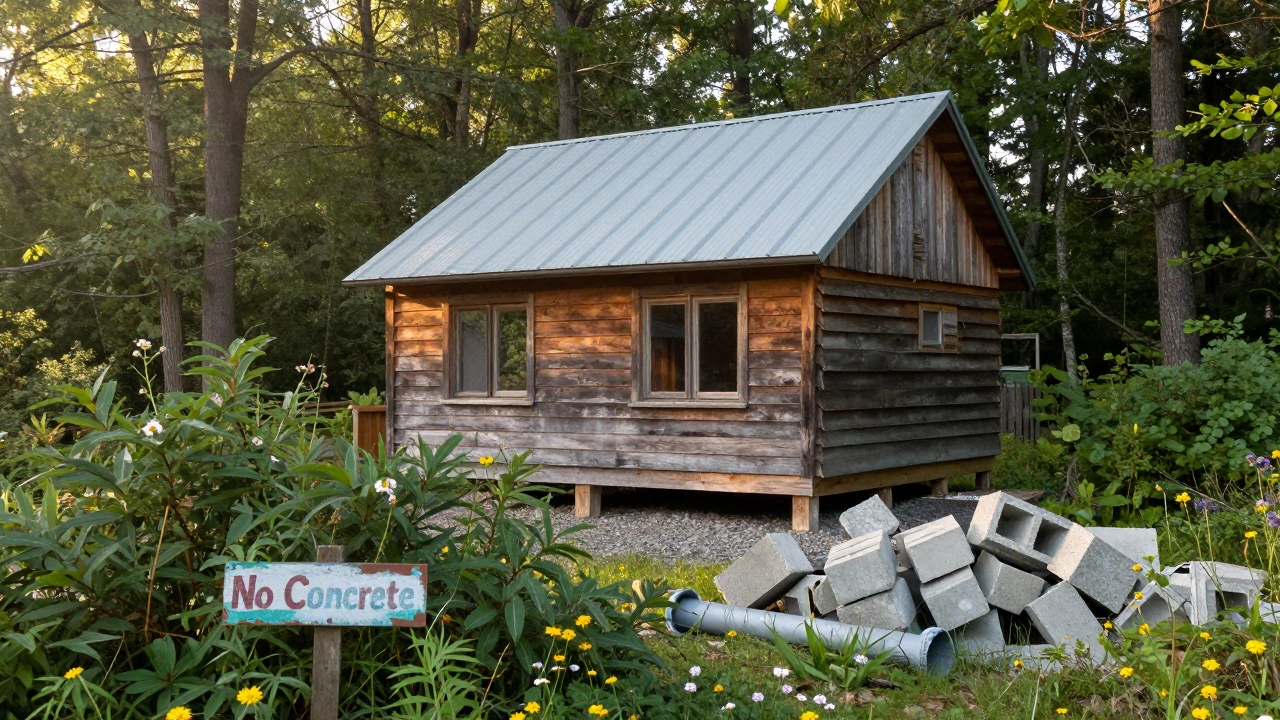
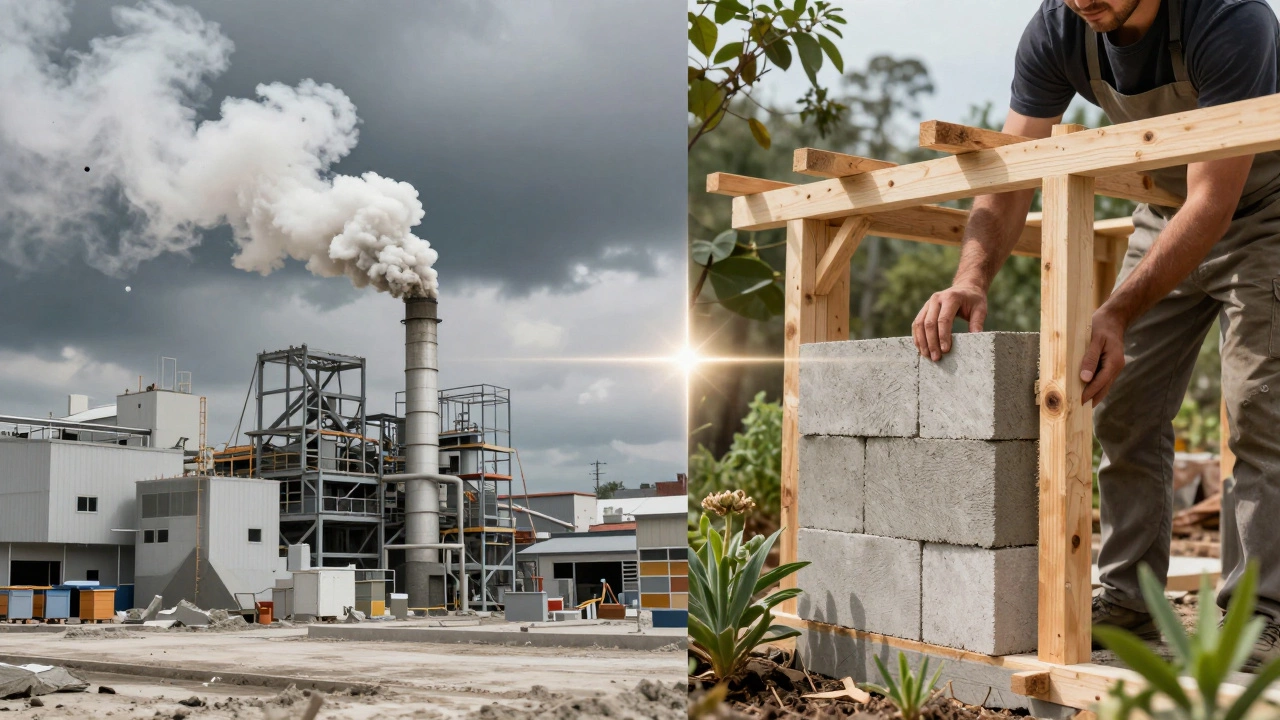
Concrete is everywhere. Foundations, driveways, walls-it’s the backbone of modern construction. But here’s the truth: producing one ton of cement, the key ingredient in concrete, releases about 0.9 tons of CO₂. That’s more than the average car emits in six months. The cement industry alone is responsible for 8% of global CO₂ emissions. If it were a country, it would be the third-largest emitter in the world, after China and the U.S.
And it’s not just about emissions. Concrete production uses massive amounts of limestone, sand, and water, stripping landscapes and depleting freshwater reserves. Once poured, it’s nearly impossible to recycle. Most demolished concrete ends up in landfills or gets downcycled into low-grade road base. For eco-friendly cottages, this means even a small concrete slab can undo years of sustainable choices.
PVC Plumbing and Vinyl Siding: Chemical Time Bombs
Vinyl, or polyvinyl chloride (PVC), is cheap, durable, and widely used in siding, windows, pipes, and flooring. But its lifecycle is toxic. Making PVC requires chlorine gas and carcinogenic chemicals like dioxins. These toxins linger in the air during production and can leach into soil and water if the material is burned or dumped.
When PVC pipes or siding break down over time-especially under UV exposure or heat-they release phthalates and lead stabilizers. These chemicals have been linked to hormone disruption and developmental issues. In a cottage where you live year-round, off-gassing from vinyl can build up indoors. Many European countries have banned PVC in new housing. In Ireland, eco-cottages built after 2020 avoid it entirely.
Traditional Insulation: Fiberglass and Spray Foam
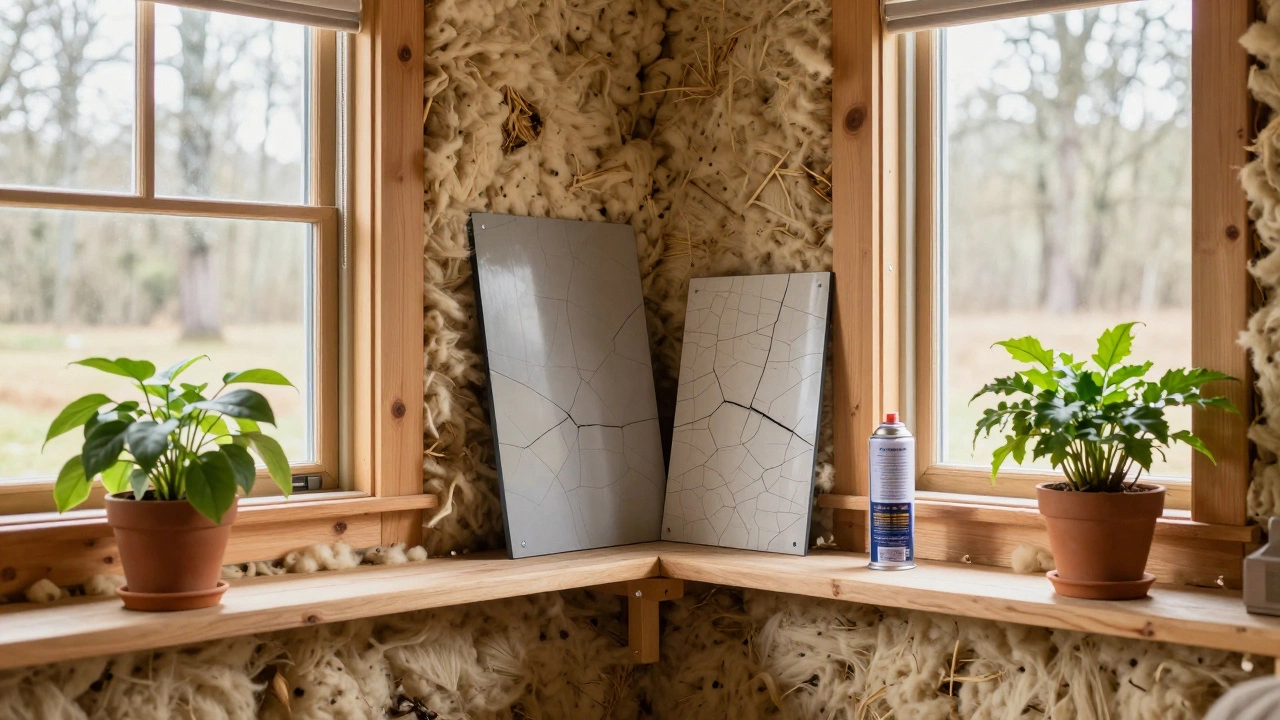
Most homes still use fiberglass batts or spray foam insulation. Fiberglass sounds harmless-it’s just glass, right? But the tiny fibers can irritate lungs and skin during installation. Worse, it’s made from sand and petroleum-based chemicals, and its production uses huge amounts of energy.
Spray foam insulation, especially the petroleum-based kind, is even worse. It contains hydrofluorocarbons (HFCs), which are over 1,000 times more potent than CO₂ as greenhouse gases. Even if the foam itself lasts 50 years, the climate damage from its blowing agents is locked in from day one. Some manufacturers now offer water-blown foam, but they’re rare and expensive. For eco-cottages, alternatives like cellulose (recycled newspaper) or sheep’s wool are far better.
Pressure-Treated Wood: Arsenic in Your Walls
For decades, pressure-treated wood was the go-to for decks, fences, and cottage foundations. It was sold as rot-resistant and long-lasting. But the old standard-chromated copper arsenate (CCA)-used arsenic, a known carcinogen. While CCA was banned for residential use in the U.S. in 2003 and the EU in 2006, it’s still found in older buildings and imported lumber.
Even newer treatments like alkaline copper quaternary (ACQ) or copper azole (CA) use copper and other heavy metals that leach into soil over time. In a cottage garden or near a well, this can contaminate groundwater. For eco-friendly builds, untreated cedar, redwood, or composite wood made from recycled plastic and wood fibers are safer bets.
Plastic Laminates and Particleboard: Off-Gassing in Plain Sight
Look inside most prefab cabinets, shelving, or built-in furniture in cottages. Chances are, it’s made of particleboard or MDF (medium-density fiberboard) covered in plastic laminate. These materials use urea-formaldehyde glue to bind wood particles. Formaldehyde is a volatile organic compound (VOC) that off-gasses for years.
Studies show indoor formaldehyde levels can be 2-5 times higher than outdoor air in homes using these materials. Symptoms include eye and throat irritation, headaches, and, in extreme cases, increased cancer risk. In a small, tightly sealed cottage, the problem gets worse. Look for products labeled CARB Phase 2 compliant or made with no-added-formaldehyde (NAF) resins. Solid wood or bamboo cabinetry avoids this entirely.
Asphalt Shingles: A Petroleum Product in Your Roof
Asphalt shingles are the most common roofing material in North America and Europe. But they’re made from petroleum, fiberglass, and coal tar. Their production is energy-intensive, and they’re not recyclable in most places. After 15-20 years, they end up in landfills-where they don’t break down.
Even worse, when they heat up in the sun, they release VOCs and microplastics into the air. In a cottage surrounded by trees and wildlife, this pollution affects local ecosystems. Alternatives like clay tiles, metal roofing (made with recycled content), or recycled rubber shingles last longer, reflect heat better, and have far lower environmental impact.
Why This Matters for Eco-Friendly Cottages
Building an eco-friendly cottage isn’t just about solar panels or composting toilets. It’s about every material you bring onto the site. One wrong choice-a cheap vinyl window, a concrete slab, or spray foam insulation-can cancel out the benefits of rainwater harvesting or passive solar design.
Real eco-builds start with a question: Where did this come from? How was it made? What happens when it’s thrown away? The materials listed above don’t just pollute during production-they continue harming long after the cottage is built.
There’s a myth that sustainable building is expensive. But the truth? It’s cheaper to avoid the hidden costs of toxic materials than to fix health problems, contaminated soil, or premature replacements down the line.
What to Use Instead
- For foundations: Insulated concrete forms (ICFs) with recycled content, or timber frame on a gravel base.
- For insulation: Cellulose, sheep’s wool, or hempcrete.
- For siding: Cedar, reclaimed wood, or fiber-cement board (low-VOC, recyclable).
- For flooring: Bamboo, cork, or FSC-certified hardwood.
- For roofing: Metal with recycled content or clay tiles.
- For cabinetry: Solid wood or NAF particleboard certified by Greenguard or FSC.
These materials aren’t just greener-they’re healthier, more durable, and often cheaper in the long run. Many local suppliers in Ireland now stock them. You just have to ask.
The Bigger Picture
Choosing eco-friendly materials isn’t about perfection. It’s about progress. If you can swap out just one toxic material in your build-say, replacing PVC pipes with copper or PEX-you’re already ahead of most. The goal isn’t to build a zero-impact cottage overnight. It’s to build one that doesn’t keep poisoning the earth long after you’ve moved in.
Every time you choose a material that’s renewable, non-toxic, and locally sourced, you’re voting for a different kind of future. One where homes don’t cost the planet.
Are all types of wood eco-friendly?
No. Only wood certified by the Forest Stewardship Council (FSC) or Programme for the Endorsement of Forest Certification (PEFC) comes from responsibly managed forests. Avoid tropical hardwoods like teak or ipe unless they’re certified-many are illegally logged and contribute to deforestation. Even sustainably sourced wood can have a high carbon footprint if shipped from far away. Local timber is always better.
Is recycled plastic a good building material?
Yes, if it’s used right. Recycled plastic lumber for decking or fencing is durable, rot-resistant, and keeps plastic out of oceans. But avoid cheap, low-grade plastic composites-they can break down in UV light and release microplastics. Look for products with high recycled content (over 80%) and UV stabilizers. Brands like Trex and Timbertech are tested for safety and longevity.
Can I use old bricks and lumber from demolished buildings?
Absolutely. Reclaimed materials are among the most eco-friendly options. Salvaged bricks, timber beams, and floorboards reduce demand for new resources and keep waste out of landfills. Many salvage yards in Ireland specialize in cottage-era materials. Just check for lead paint, asbestos, or insect damage before using them.
Why is insulation so tricky to make eco-friendly?
Because the best insulators-like spray foam-often use climate-warming gases. Natural alternatives like wool or cellulose work well but need thicker layers. Hempcrete is breathable and carbon-negative, but it’s not widely available. The trade-off isn’t just cost-it’s performance. Look for materials with high R-values per inch and low embodied energy. A certified green builder can help you balance warmth and sustainability.
What’s the most eco-friendly foundation for a cottage?
The most eco-friendly option is often no foundation at all. Elevated timber frames on screw piles or stone piers reduce concrete use and let the ground breathe. If you need a slab, use insulated concrete forms (ICFs) made with recycled content, or a floating slab on a bed of gravel. Avoid traditional poured concrete unless absolutely necessary.