Beachfront vs. Oceanview Location Checker
Describe the Hotel's Location
Based on the article, analyze the hotel using satellite maps and descriptions. Select the options that match what you see.
Ready to Verify
Select the criteria above to find out if the hotel is truly beachfront or just marketing hype.
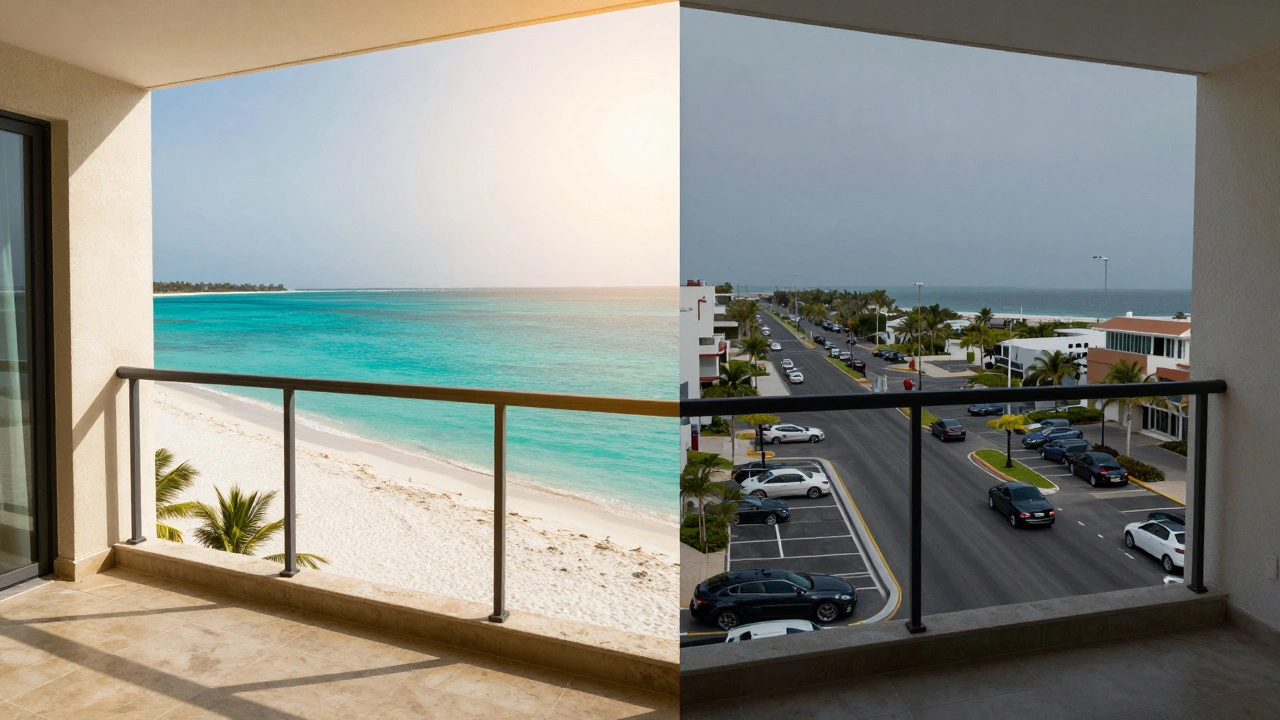
You’ve found the perfect hotel online. The photos show white sand, turquoise water, and a balcony that looks like it’s floating above the waves. You book it without hesitation. Then you arrive, drop your bags, and realize there is a parking lot between you and the shore. Or worse, a busy road. This frustration happens because "beachfront" is one of the most loosely used words in travel marketing. It sounds simple, but in practice, it can mean anything from stepping onto the sand to being within walking distance of it.
Understanding what beachfront actually means can save you from disappointment and help you find the exact experience you want. Whether you are looking for direct sand access, a room with an unobstructed view, or just a place near the coast, knowing the difference between these terms is crucial. Let’s break down the reality behind the labels so you can book with confidence.
The Definition of Beachfront vs. Reality
In the strictest sense, a beachfront property is a building where the structure sits directly on the edge of the beach, with no intervening roads, sidewalks, or other buildings blocking access to the sand. If you open your front door or step out of your elevator, you should be able to walk straight onto the sand. There might be a small patio, a pool deck, or a row of palm trees, but nothing substantial stands between you and the tide line.
However, the hospitality industry rarely adheres to this strict definition. Many hotels use "beachfront" as a broad category that includes any property within a few hundred meters of the ocean. This ambiguity creates a gap between expectation and reality. To navigate this, you need to look beyond the headline and examine the specific attributes of the location.
- True Beachfront: Direct access to the sand. No roads. No fences (or low decorative ones). Your room may have a private path to the water.
- Beachside: Close to the beach, often separated by a sidewalk, a bike path, or a narrow service road. You can see the beach, but you have to cross something to get there.
- Oceanview: You can see the water from your window or balcony, but the hotel itself might be set back on a hill, behind a golf course, or across a street.
- Near the Beach: Within walking distance (usually 5-10 minutes), but not adjacent. This often involves crossing streets and navigating urban infrastructure.
Why Hotels Use Vague Language
Hotels have a strong incentive to use aspirational language. The word "beachfront" sells rooms at a premium price. If a hotel has to say "across the street," the perceived value drops significantly. Marketing teams know this, so they lean into the looser interpretation of the term. This isn’t necessarily malicious; it’s a standard industry practice driven by competition and profit margins.
Additionally, legal definitions vary by region. In some jurisdictions, zoning laws define "beachfront" based on setback lines from the high-tide mark. A hotel built on land owned by the municipality right up to the public easement might legally call itself beachfront, even if a paved promenade separates the lobby from the sand. Understanding this nuance helps you read between the lines when reviewing hotel descriptions.
How to Verify True Beachfront Access
Relying on the hotel’s description alone is risky. You need to verify the location using independent tools. Here is a practical checklist to determine if a hotel truly offers beachfront access:
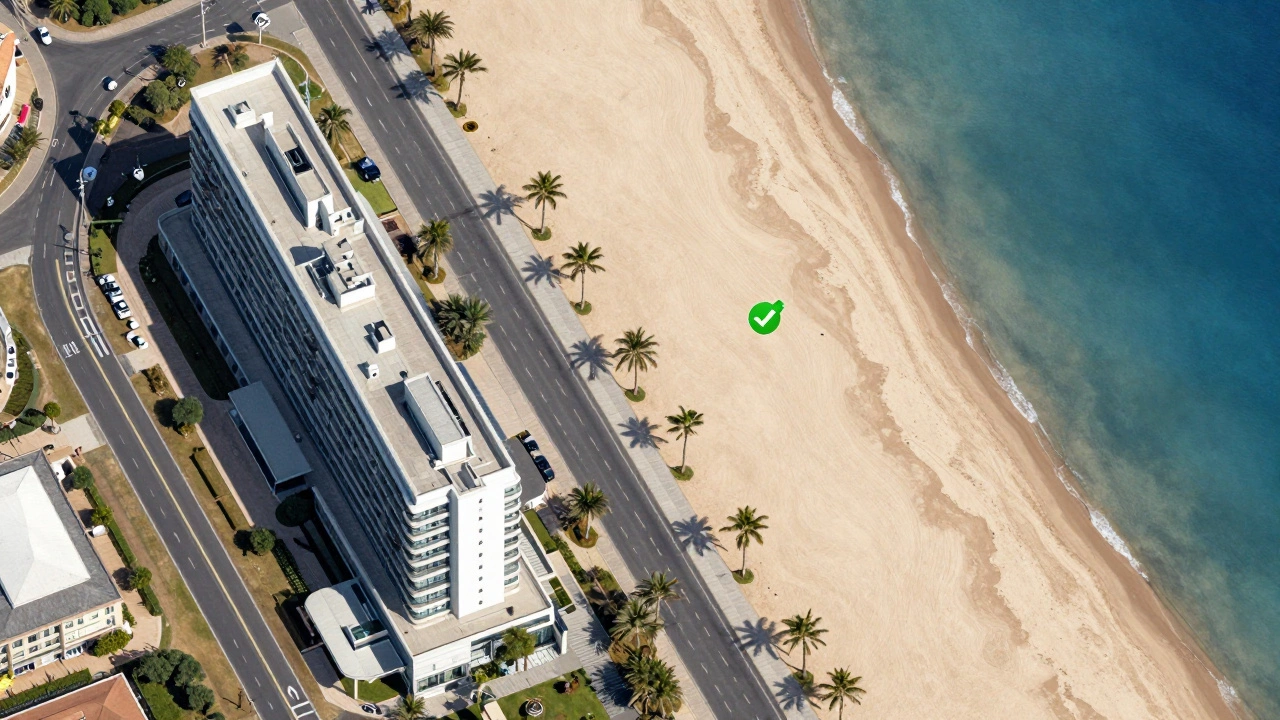
- Use Satellite View: Open Google Maps or Apple Maps and switch to satellite view. Zoom in on the hotel. Look for the physical barrier between the building and the sand. Is there a road? A parking lot? A dense forest? If you see asphalt between the hotel and the water, it is not true beachfront.
- Check Recent Reviews: Search for keywords like "walk to beach," "road noise," or "sand access." Guests often mention the actual distance and obstacles. Phrases like "short walk through the garden" suggest a buffer zone, while "steps away from the sand" confirms proximity.
- Look at Guest Photos: Professional photos are staged. Guest photos show reality. Look for images taken from the balcony or lobby floor. Can you see the horizon uninterrupted? Are people walking on the sand in the foreground?
- Examine the Map Pin: On booking platforms, click the map icon. See exactly where the pin drops relative to the coastline. If the pin is placed on the beach but the hotel is two blocks inland, the platform is misleading you.
The Trade-Offs of True Beachfront Stays
While waking up to the sound of waves is romantic, true beachfront locations come with specific drawbacks that many travelers overlook. Being directly on the sand affects comfort, cost, and convenience in ways that aren’t always obvious.
| Feature | True Beachfront | Near Beach / Oceanview |
|---|---|---|
| Price | High premium (20-50% more) | Standard rates, better value |
| Noise | Constant wave crash, wind, early morning cleaning crews | Quieter, occasional traffic or city noise |
| Air Quality | Salty air can affect electronics and clothing; higher humidity | Fresher air, less salt corrosion |
| Convenience | Often isolated; fewer restaurants and shops nearby | Usually closer to town centers, dining, and transport |
| Privacy | Public beaches mean crowds; less secluded balconies | More privacy, especially in upper floors or gardens |
For example, if you are sensitive to noise, the constant roar of waves can prevent deep sleep. Similarly, salt spray can damage sunglasses, cameras, and hair if you leave them on a balcony overnight. In contrast, a hotel just a five-minute walk from the beach often provides a quieter environment, easier access to local cuisine, and lower prices, allowing you to spend more on experiences rather than just the room.
Regional Differences in Beachfront Terminology
The meaning of "beachfront" also shifts depending on where you are traveling. Coastal geography and local culture influence how properties are labeled.
In the Mediterranean region, such as Spain or Italy, "beachfront" often implies a resort complex with its own private beach club. These areas frequently feature stepped concrete accesses to the water rather than natural sandy shores. The hotel may be technically beachfront, but the beach itself is engineered and managed separately.
In Caribbean islands, beachfront usually means direct access to soft sand, but it can also involve steep cliffs or rocky outcrops. Some resorts market themselves as beachfront despite requiring a short boat ride or a ladder climb to reach swimmable water. Always check the beach type: sand, rock, or pebble.
In North America, particularly along the East Coast, beachfront hotels are often subject to strict erosion controls and boardwalks. A hotel might be beachfront, but a wooden boardwalk and a row of lifeguard stations separate you from the sand. This is still considered beachfront, but the immediate immersion in nature is less direct.

Choosing the Right Location for Your Needs
Your ideal stay depends on your priorities. If you are a surfer who needs to drag their board from the car to the water every morning, true beachfront is non-negotiable. If you are a couple seeking romance and quiet, a garden-view room in a beachside hotel might offer more intimacy and better acoustics.
Consider the purpose of your trip:
- Family Vacations: True beachfront is convenient for keeping an eye on children. However, ensure the beach is calm and safe. Rocky or steep-access beaches can be hazardous for young kids.
- Honeymoons: Prioritize views and privacy. An oceanview room on a higher floor in a slightly set-back hotel often provides a more panoramic and peaceful experience than a ground-floor beachfront room with foot traffic outside.
- Business Travelers: Proximity to amenities matters more than sand access. A hotel near the beach but close to conference centers and restaurants will save you time and stress.
- Budget Travelers: Opt for "near the beach." The savings can be redirected toward tours, dining, and activities. A short taxi ride or walk is a small trade-off for significant cost reduction.
Final Thoughts on Booking Smart
Don’t let the word "beachfront" dictate your entire decision. Use it as a starting point, then dig deeper. Verify with maps, read recent reviews, and consider what you value most: convenience, view, silence, or price. By understanding the nuances of hotel location terms, you transform from a passive buyer into an informed traveler. You’ll avoid the parking lot surprise and find the spot that truly matches your vision of a coastal getaway.
Does beachfront always mean I can walk onto the sand?
Not necessarily. While true beachfront implies direct access, many hotels use the term loosely to include properties separated by sidewalks, bike paths, or small roads. Always check satellite imagery to confirm there are no physical barriers between the hotel and the beach.
Is an oceanview room the same as a beachfront room?
No. An oceanview room guarantees you can see the water from your window or balcony, but the hotel itself may be located further inland, behind other buildings, or on a hill. Beachfront refers to the building's physical location on the edge of the beach, regardless of whether your specific room faces the water.
Why are beachfront hotels more expensive?
Beachfront land is scarce and highly desirable. The premium price reflects the limited supply of properties with direct sand access, higher maintenance costs due to salt and humidity, and the added convenience of immediate beach entry. Additionally, these locations often command higher rates due to their perceived luxury status.
How can I tell if a beach is private or public?
In most countries, beaches below the high-tide line are public property, even if the hotel claims exclusive access. However, hotels may control the area above the tide line, including sunbeds and umbrellas. Check local regulations for your destination. In places like California and Australia, public access is strictly protected, while in some Caribbean islands, private beach clubs restrict entry to guests only.
Are beachfront hotels noisy?
They can be. The constant sound of waves crashing against the shore is soothing to some but disruptive to light sleepers. Additionally, beachfront areas often have early morning cleaning crews, seagulls, and evening parties. If noise is a concern, request a room facing away from the beach or choose a hotel set slightly back from the shoreline.
What is the difference between beachside and beachfront?
Beachfront typically means the property sits directly on the sand with no major obstacles. Beachside suggests proximity to the beach, often separated by a sidewalk, park, or minor road. Beachside properties offer a view and easy access but lack the immediate immersion of true beachfront locations.