
Resort Food Waste Impact Calculator
Enter your estimated daily guest count to see how different waste management strategies affect the environment.
Scenario A: Composting
Best Practice- Methane Emissions: ~0 lbs (Negligible)
- Landfill Volume: 0 lbs
- Outcome: Nutrient-rich soil created for gardens.
Scenario B: Landfill
High Impact- Methane Emissions: 0 lbs
- CO2 Equivalent: 0 lbs
- Outcome: Greenhouse gas contribution to climate change.
Scenario C: Animal Feed
Circular Economy- Food Diverted: 0 lbs
- Waste Remaining: ~20% (Scraps/Plates)
- Outcome: Livestock nutrition, reduced feed costs.
Scenario D: Donation
Social Benefit- Food Donated: 0 lbs
- Meals Provided: 0 meals
- Outcome: Hunger relief (Note: Rare for buffet scraps).
You’ve just finished your third plate of shrimp at the evening buffet. The servers are already scraping plates into massive metal bins with a rhythmic clatter that echoes through the dining hall. It’s easy to assume that all this uneaten food heads straight to a landfill, adding to the growing mountain of global waste. But the reality inside all-inclusive hotels is complex hospitality operations that manage massive volumes of perishable goods daily is far more nuanced. These resorts operate on tight margins and high volume, meaning their approach to leftover food is driven by a mix of cost control, health regulations, and increasingly, environmental responsibility.
If you’re curious about where those half-eaten appetizers actually go, or if you’re planning a trip and want to understand the sustainability practices of your destination, the answer isn’t simple. It depends heavily on the resort’s size, location, and commitment to green initiatives. Some properties have sophisticated systems in place to divert nearly 100% of their organic waste from landfills, while others still rely on traditional disposal methods due to local infrastructure limitations. Understanding this process gives you a clearer picture of the true cost of convenience and helps you make more informed travel choices.
The First Line of Defense: Portion Control and Inventory Management
Before any food even hits the trash bin, modern all-inclusive resorts employ rigorous strategies to minimize waste at the source. The biggest misconception is that buffets are chaotic free-for-alls. In reality, they are tightly controlled environments. Chefs and kitchen managers use historical data and current occupancy rates to predict exactly how much food needs to be prepared for each meal service. This practice, known as yield management, ensures that they aren’t cooking 500 portions of steak when only 300 guests are expected for dinner.
Kitchen staff also utilize smaller serving vessels and replenish dishes frequently rather than leaving large trays out all night. This technique, often called "batching," keeps food fresh and reduces the amount of hot food sitting under heat lamps for hours. If a dish isn’t selling well, it might be pulled early and repurposed. For example, unserved roasted chicken might become the base for a next-day salad or soup. This internal recycling happens constantly behind the scenes, long before the guest sees anything wasted.
- Pre-order systems: Many high-end resorts now require guests to pre-select main courses, allowing kitchens to prepare exact quantities.
- Dynamic menus: Menus change daily based on ingredient availability and previous days’ consumption patterns.
- Staff training: Servers are trained to monitor plate returns in real-time, alerting chefs immediately if certain items are being left untouched.
Where Does Uneaten Food Actually Go?
Despite best efforts, some food will inevitably end up on the discard pile. So, what happens to it? The destination of leftover food varies significantly depending on the resort’s location and partnerships. Here are the most common pathways:
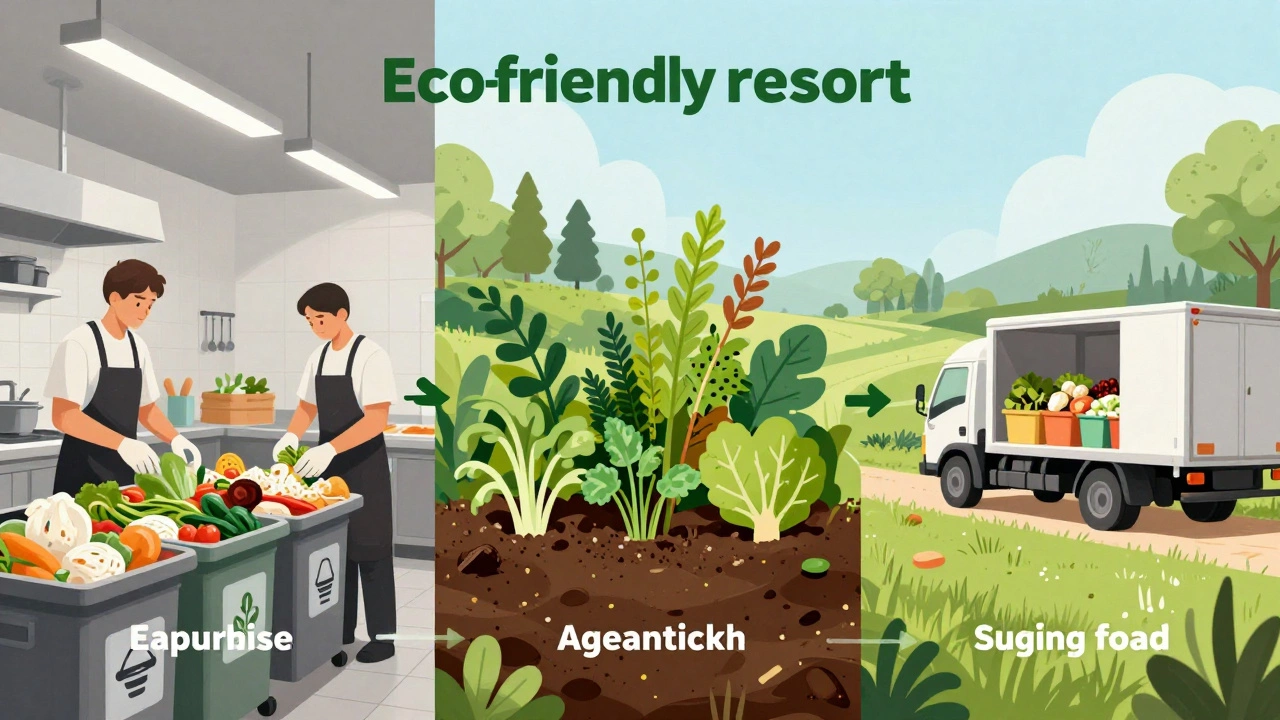
- Composting: This is the gold standard for sustainable resorts. Organic matter is broken down into nutrient-rich soil. Many eco-conscious chains have on-site composting facilities or partner with local farms. The resulting compost is then used in the resort’s own gardens to grow herbs and vegetables for the kitchen, creating a closed-loop system.
- Animal Feed: In rural or agricultural areas, unserved but safe-to-eat food (like bread, vegetables, and cooked meats) may be donated to local farmers for livestock. This requires strict adherence to safety protocols to ensure no cross-contamination occurs.
- Landfill: Unfortunately, this is still the most common outcome, especially in regions lacking robust waste management infrastructure. Food waste in landfills decomposes anaerobically, producing methane, a potent greenhouse gas. Resorts trying to reduce their carbon footprint actively work to avoid this option.
- Donation to Charities: While less common for buffet scraps due to health codes, some larger hotels donate surplus packaged goods or prepared meals from private events to local shelters. However, liability laws often restrict the donation of buffet leftovers.
It’s worth noting that even within these categories, there’s variation. A luxury resort in Costa Rica might have a dedicated permaculture garden fed entirely by kitchen waste, while a mass-market beach club in a developing nation might lack access to reliable composting services. When researching accommodations, looking for certifications like Green Key or EarthCheck can signal a property’s genuine commitment to waste reduction.
| Method | Environmental Impact | Cost to Resort | Feasibility |
|---|---|---|---|
| Composting | Low (reduces methane) | Medium (setup/maintenance) | High in eco-resorts |
| Animal Feed | Low (circular economy) | Low (transport/logistics) | Moderate (requires local farms) |
| Landfill | High (methane production) | Low (standard tipping fees) | Universal (but discouraged) |
| Donation | Very Low (social benefit) | Medium (logistics/liability) | Low for buffet waste |
The Role of Technology in Reducing Waste
Technology is playing an increasingly important role in helping all-inclusive hotels manage food waste. Smart sensors placed in trash bins can weigh discarded food and categorize it by type. This data feeds into software platforms that provide detailed analytics on what’s being wasted and why. Managers can see, for instance, that 40% of the watermelon served on Tuesdays goes uneaten, prompting them to adjust future orders or shift the fruit to a different day.
Some resorts are experimenting with AI-driven inventory systems that integrate with point-of-sale data. These systems can predict demand with remarkable accuracy, reducing over-preparation. Additionally, apps that allow guests to customize their meals or opt-out of certain buffet sections help tailor offerings to individual preferences, further minimizing leftovers. While these technologies represent a significant investment, the long-term savings on food costs and waste disposal fees often justify the expense.
For travelers interested in supporting sustainable practices, choosing resorts that highlight their tech-enabled waste reduction efforts is a smart move. These properties are typically more transparent about their operations and more likely to invest in other eco-friendly initiatives, such as energy-efficient lighting and water conservation programs.

How Guests Can Help Reduce Waste
While hotels bear the primary responsibility for managing waste, guests play a crucial role too. Your choices at the buffet directly impact the volume of leftovers. Here are practical ways to contribute to a more sustainable stay:
- Take only what you’ll eat: It’s tempting to fill your plate with everything that looks good, but remember that you can always go back for seconds. Leaving half your plate means that food is likely headed for the compost or landfill.
- Try new things sparingly: If you’re unsure about a dish, take a small portion first. This allows you to sample without committing to a full serving you might not finish.
- Provide feedback: If you notice a particular dish consistently going uneaten, let the staff know. Their insights can help kitchens adjust portions or rotate menu items more effectively.
- Support zero-waste initiatives: Choose resorts that advertise their sustainability efforts. Your booking dollars vote for the kind of industry you want to support.
Even small changes in behavior can add up across thousands of guests. Imagine if every visitor took just one fewer bite-sized item they didn’t need-that could save hundreds of pounds of food waste per week at a large resort.
Regulatory Pressures and Future Trends
Governments around the world are beginning to crack down on food waste. France, for example, has banned supermarkets from throwing away edible food, requiring donations instead. Similar legislation is emerging in various countries, including parts of Europe and North America. All-inclusive hotels, particularly those operating internationally, must comply with these evolving regulations. This pressure is driving innovation and forcing the industry to rethink its relationship with food.
Looking ahead, we can expect to see more circular economy models adopted by hospitality groups. This might include on-site insect farming (using black soldier fly larvae to convert waste into protein for animal feed), advanced anaerobic digesters that generate biogas for electricity, and deeper integration with local agricultural communities. As consumer awareness grows, transparency will become a key competitive advantage. Resorts that openly share their waste diversion rates and sustainability metrics will attract environmentally conscious travelers.
For now, the journey toward zero waste is ongoing. While no resort is perfect, many are making significant strides. By understanding where your leftover food goes, you gain a deeper appreciation for the complex logistics involved in running an all-inclusive experience-and perhaps a renewed motivation to make mindful choices during your stay.
Do all-inclusive hotels throw away all their leftover food?
No, most modern all-inclusive hotels do not throw away all their leftover food. They use a combination of portion control, repurposing ingredients, composting, and sometimes animal feed donation to minimize waste. However, some waste still ends up in landfills, especially in areas with limited waste management infrastructure.
Can I donate my unfinished buffet food to charity?
Generally, no. Health and safety regulations strictly prohibit donating buffet leftovers due to the risk of contamination and bacterial growth. Food must remain under controlled temperatures and conditions to be safe for donation, which is difficult to guarantee once it’s been served on open buffets.
How do hotels track food waste?
Many hotels use specialized software and smart bins equipped with scales and cameras. These tools capture images of discarded food, categorize it (e.g., fruits, proteins, grains), and weigh it. The data is then analyzed to identify trends and reduce future waste through better inventory management and menu planning.
Is composting common in all-inclusive resorts?
Composting is becoming increasingly common, especially among eco-certified resorts. Properties with large grounds often have on-site composting facilities. Others partner with local farms or municipal composting services. However, its prevalence depends heavily on local regulations and available infrastructure.
What should I look for to find a sustainable all-inclusive hotel?
Look for recognized sustainability certifications like Green Key, EarthCheck, or LEED. Check the hotel’s website for specific details about their waste management practices, such as composting programs, water conservation efforts, and sourcing of local ingredients. Transparent reporting on environmental impact is a strong indicator of genuine commitment.