Cottage Authenticity Checker
How authentic is this house?
Answer these questions to determine if a house meets authentic cottage characteristics based on the article.
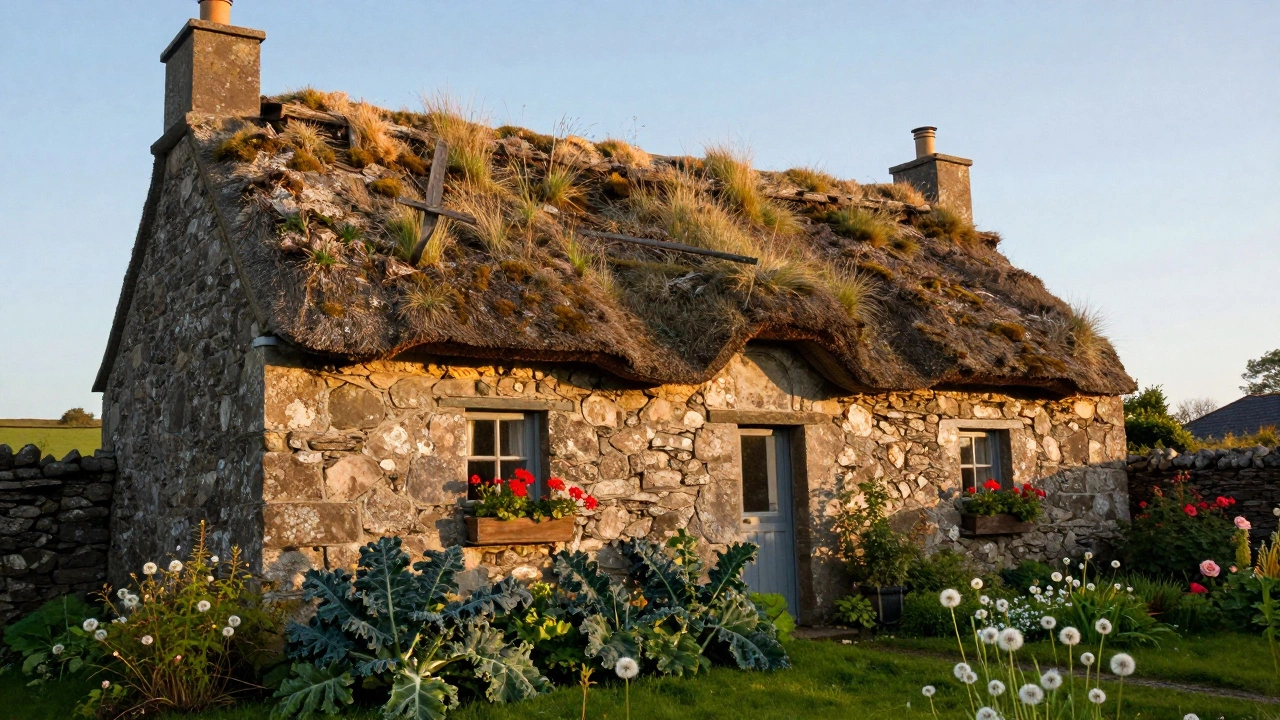
Walk through any village in the Irish countryside, and you’ll see them-small, cozy houses with thatched roofs, crooked chimneys, and flower boxes spilling over with geraniums. They look like something out of a storybook. But not every small house is a cottage. And not every cottage looks the same. So what actually makes a house a cottage? It’s not just size. It’s not just a white picket fence. It’s a mix of history, craft, and character that’s been shaped by centuries of rural life.
It’s Not About Size
People often think a cottage is just a small house. But that’s misleading. Some cottages are barely bigger than a shed. Others are two stories and hold five bedrooms. What matters isn’t square footage-it’s intention. A cottage was built to serve a purpose: to house farmers, shepherds, or laborers close to their work. That’s why you’ll find cottages clustered near fields, woodlands, or rivers. They weren’t meant for grand entertaining. They were meant for warmth, shelter, and quiet living.
Compare that to a bungalow or a studio apartment. Those are designed for efficiency or urban convenience. A cottage, even if it’s been renovated, still carries the soul of its original function. If a house was built as a weekend getaway with no connection to land or labor, it’s not a cottage. It’s a vacation home.
Materials That Tell a Story
Real cottages don’t use prefab panels or synthetic siding. They use what was local and available. In Ireland, that meant limestone, slate, or hand-cut granite. In England, it was flint or cob. In Scotland, it was rough-hewn stone with moss growing between the cracks. The walls weren’t smooth. They were uneven. They were built by hand, one stone at a time, with mortar mixed from lime and sand.
Roofs were thatched with reeds or straw, sometimes covered in turf to hold in heat. Windows were small, set deep into thick walls to keep out the wind. Chimneys stuck out at odd angles because they were built by masons who didn’t use levels-just experience and instinct.
Modern homes copy the look with faux stone veneer and plastic shingles. But a real cottage’s materials age differently. They darken with rain, soften with time, and grow wild with lichen. You can’t fake that kind of patina. It takes decades, sometimes centuries, to earn.
The Roof Tells the Truth
One of the clearest signs of a true cottage is the roof. Not just the shape, but the material. Thatch was the original choice because it was cheap, renewable, and surprisingly effective. A well-laid thatched roof can last 40 to 60 years. It insulates better than most modern materials. And it breathes-no condensation buildup, no mold.
Even when thatch was replaced, it wasn’t with asphalt shingles. It was with local slate, clay tiles, or wood shingles. You’ll rarely find a traditional cottage with metal roofing unless it was added in the 1950s as a quick fix. And even then, it’s usually only on the back or side.
Look at the pitch. Cottages have steep roofs-not just for style, but for function. Rain and snow need to slide off fast. A shallow roof on a cottage? That’s a red flag. It probably wasn’t built to last.
Windows and Doors That Don’t Match
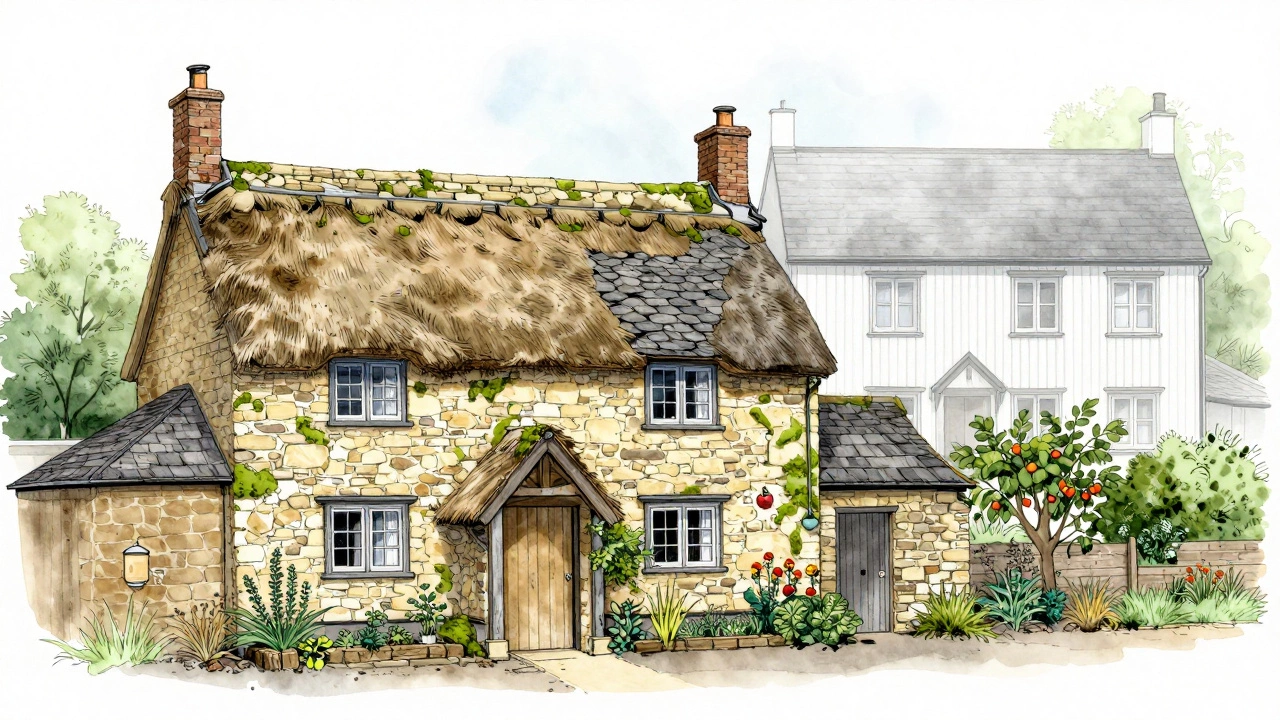
Walk up to a real cottage and notice the windows. They’re rarely the same size. One might be a small square, another a tall, narrow rectangle. That’s because they were added over time. A cottage wasn’t built all at once. It grew.
Maybe the original owner added a window when they had a child. Later, when they expanded the kitchen, they punched another hole in the wall. The doors? Often low. Not because people were shorter back then, but because wood was expensive. Builders used what they had. A lower door meant less timber. And it kept the cold out better.
Modern homes have uniform windows for aesthetics. Cottages have mismatched ones because they were practical. The charm isn’t in symmetry. It’s in survival.
Chimneys That Lean
Every cottage has at least one chimney. Often more. And they almost always lean slightly. Not because the builder was sloppy. Because the foundation settled. The chimney was built on a stone base, which sank over time. The smoke still rose. The fire still burned. And the house kept standing.
That lean isn’t a defect. It’s a badge. It means the cottage has lived through storms, frost, and decades of use. You’ll find this in cottages from Devon to Donegal. The crooked chimney is a sign of endurance. A perfectly straight chimney on an old house? That’s a repair. Maybe even a replacement. It’s not the original.
It Has a Garden, Not a Lawn
A cottage doesn’t have a manicured lawn. It has a garden. A messy, wild, useful garden. There’s usually a vegetable patch, a few fruit trees, maybe a beehive or a chicken coop. Herbs grow near the back door. Roses climb the walls. Nettles and dandelions aren’t pulled-they’re left because they’re useful.
The garden isn’t for show. It’s for feeding, healing, and surviving. That’s why you’ll find a well or a rain barrel nearby. A cottage garden is an extension of the house. It’s part of the system.
Modern homeowners plant ornamental flowers for Instagram. Cottagers planted kale and comfrey because they needed them. The difference shows.
The Inside Tells the Same Story
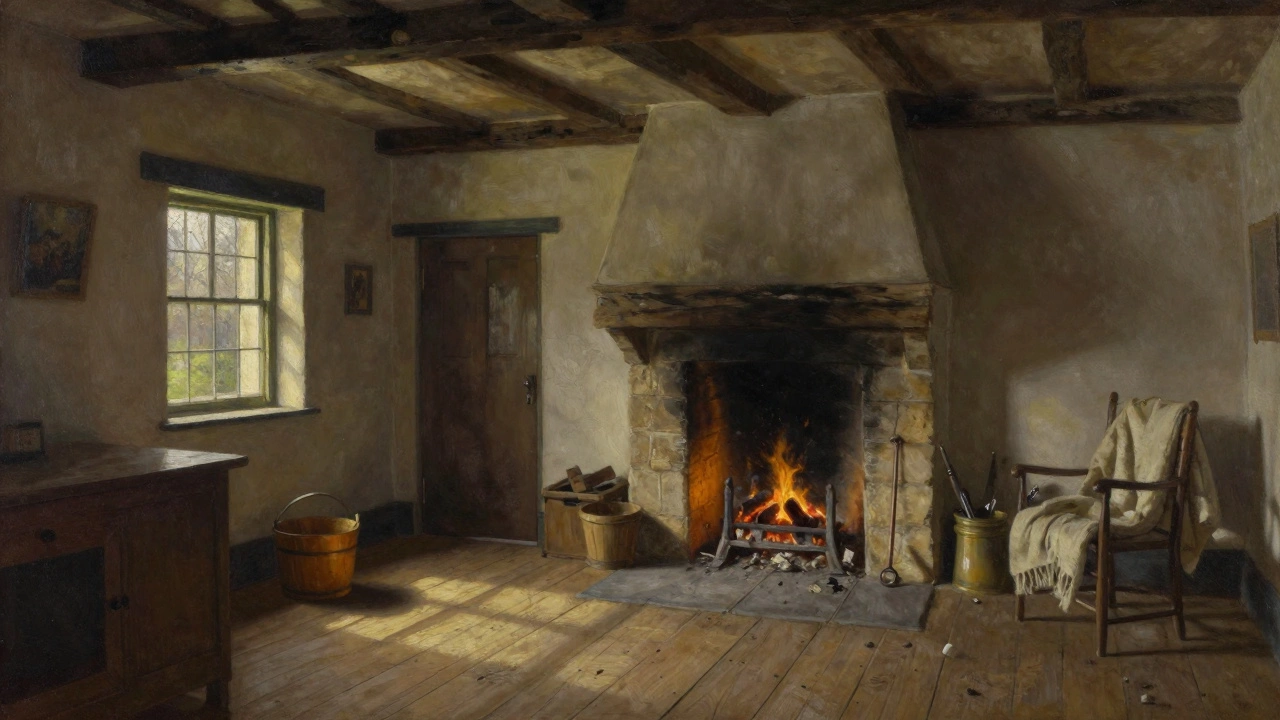
Step inside, and you’ll feel it. The ceilings are low. The floors are uneven. The stairs creak because they’re made from old timber, not engineered wood. There’s no central heating. Instead, there’s a hearth-the heart of the home.
Original cottages had one main room. The kitchen doubled as the living room. The bedroom was upstairs, maybe just a loft with a ladder. There was no bathroom. Water came from a pump outside. The toilet? A privy in the back.
Even when modernized, a true cottage keeps those rough edges. The exposed beams aren’t painted white. The plaster isn’t smooth. The floorboards aren’t sanded to perfection. They’re worn down by generations of feet. That’s not a flaw. It’s history.
It Doesn’t Look Like a Catalog
Today, you’ll see houses labeled "cottage style" in real estate listings. They have white trim, dormer windows, and a front porch with rocking chairs. They look like they were pulled from a Pinterest board. But they’re built with steel frames and vinyl siding. They’re mass-produced. They’re not cottages.
A real cottage doesn’t look like it was designed by an architect. It looks like it grew out of the ground. It doesn’t follow rules. It follows need.
If you’re looking for a cottage, don’t search for "cottage style homes." Search for places built before 1900. Look for ones that still have original chimneys, hand-hewn beams, and gardens that look like they’ve been tended by the same family for 80 years.
Why This Matters
Calling every small house a cottage dilutes the meaning. It turns a way of life into a decoration. But cottages aren’t just buildings. They’re stories. They’re the places where people lived close to the land, made do with what they had, and passed down skills through generations.
When we lose real cottages to renovation or demolition, we lose more than wood and stone. We lose a connection to how people lived before everything was mass-produced. The cottage isn’t a trend. It’s a testament.
So next time you see one, don’t just admire the flowers. Look at the crooked chimney. Touch the uneven wall. Notice how the window doesn’t line up with the door. That’s not a mistake. That’s the soul of the cottage.