Business Hotel Quality Score Calculator
How well does a hotel meet your business travel needs? This calculator scores hotels based on the essential qualities business travelers require. Select the qualities that matter most to you to see your customized score.
Select Your Priority Qualities
Your Business Hotel Score
Select your priorities to see your score
When you’re booking a hotel for a business trip, you’re not looking for a vacation. You need a place that works as hard as you do. A business hotel isn’t just a bed with a Wi-Fi password-it’s a mobile office, a quiet retreat, and a reliable base all in one. The difference between a good stay and a disastrous one often comes down to just a few key qualities. And if you’ve ever been stuck in a hotel room with no working printer, a noisy hallway, or a breakfast that took 45 minutes to arrive, you know how much these details matter.
Reliable, High-Speed Internet
Nothing kills a business trip faster than spotty Wi-Fi. For professionals, internet isn’t a luxury-it’s oxygen. A business hotel must offer consistent, high-speed connections that can handle video calls, file uploads, and cloud access without lag. It’s not enough to say "free Wi-Fi"-you need to know the speed. Top business hotels now advertise minimum download speeds of 100 Mbps, with some offering dedicated business lines that prioritize bandwidth for conference calls. If the hotel doesn’t list its internet specs, assume it’s not reliable. And don’t trust the front desk’s promise that "it’s fast here." Ask for proof: can you connect three devices at once and run Zoom, Slack, and Dropbox without buffering?
Quiet, Soundproofed Rooms
Business travelers don’t need a party. They need silence. A room that lets you hear the next guest’s TV, the elevator ding at 2 a.m., or the housekeeper’s cart clanking down the hall is a dealbreaker. Modern business hotels invest in acoustic insulation: double-glazed windows, thick carpeting, sealed doors, and noise-canceling HVAC systems. Some even offer rooms with white noise machines or soundproofing upgrades for an extra fee. If you’re scheduling a critical call at 7 a.m., you shouldn’t have to worry about the housekeeping team knocking before you’re ready. Look for hotels that advertise "quiet zones" or have policies limiting noise after 10 p.m. And if the hotel doesn’t mention soundproofing at all, it’s probably not designed for professionals.
Functional Workspace
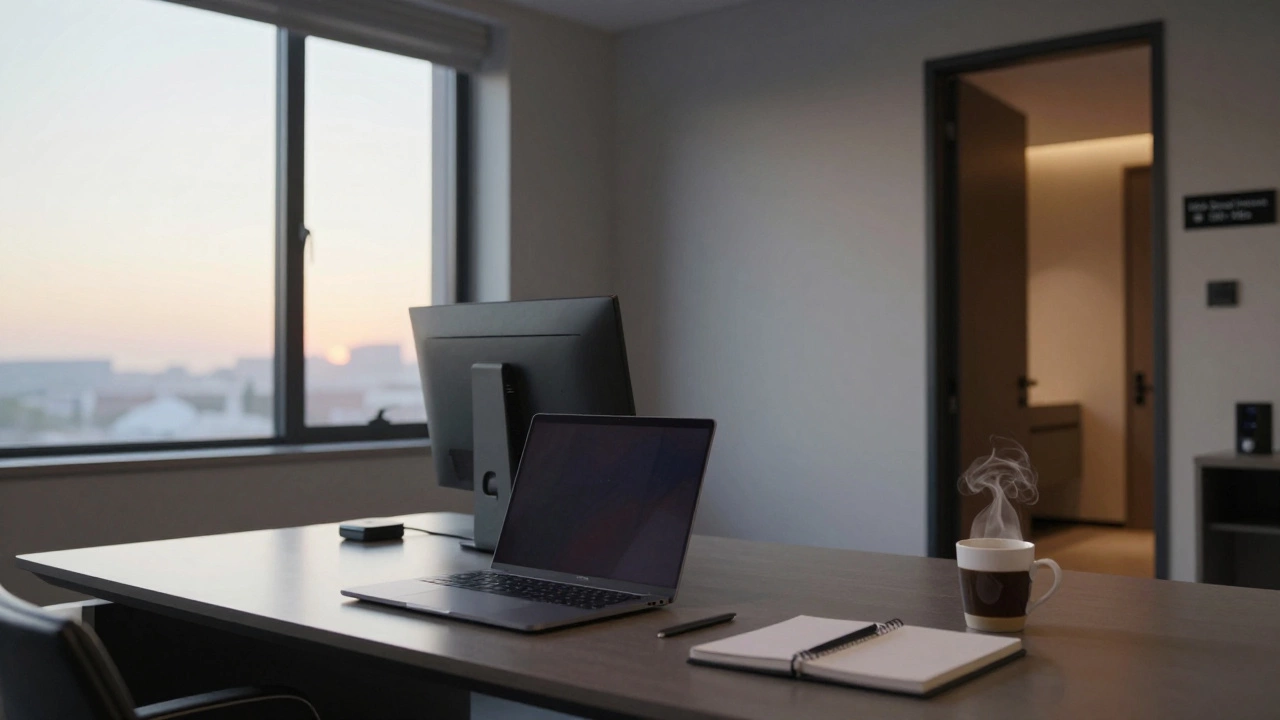
Your hotel room should function like a mini-office. That means more than just a desk and a chair. A proper business hotel workspace includes: a desk large enough for a laptop, external monitor, and notebook; a chair that supports your back for hours; at least two power outlets (preferably USB-C and standard); and a well-lit area with no glare on your screen. Many hotels now include docking stations, wireless charging pads, and even built-in monitor mounts. The worst offender? A tiny, wobbly desk shoved into a corner with one outlet and a lamp that casts shadows across your keyboard. If you’re doing serious work, you need space and stability. Some business hotels even offer room service for coffee or tea during work hours-because caffeine is part of the job.
24/7 Business Services
Business doesn’t stop at 5 p.m., and neither should the hotel. Top-tier business hotels offer round-the-clock services: printing, scanning, faxing, and courier drop-off. You shouldn’t have to hunt down a copy shop at midnight because your presentation crashed and you need a hard copy for tomorrow’s meeting. Some hotels have dedicated business centers with staff available at all hours. Others integrate services into the app: press a button on your phone, and a staff member brings you a printed report in five minutes. Even basic features like 24-hour front desk service, emergency toiletries, or same-day laundry are critical. If your hotel requires you to call the front desk during business hours to get a printer key, you’re already behind.

Convenient Location
Location isn’t just about proximity to the office-it’s about access to everything you need. A good business hotel is within a 15-minute drive or transit ride from major business districts, conference centers, or client offices. It should also be near reliable public transport, taxi stands, or ride-share pickup zones. Bonus points if it’s close to a pharmacy, grocery, or coffee shop that’s open early. Avoid hotels tucked into industrial parks or far from transit hubs-those are usually cheaper, but they waste your time. The best business hotels are in mixed-use areas: quiet enough to sleep, but close enough to walk to a meeting. Think downtown, not outskirts.
Professional Dining Options
Breakfast isn’t about pancakes and waffles. It’s about efficiency. A business hotel should offer a quick, healthy, and reliable morning meal-think fresh fruit, yogurt, hard-boiled eggs, whole grain toast, and strong coffee. No long lines. No buffet chaos. Some hotels now offer grab-and-go breakfast bags you can pick up before your 7 a.m. meeting. Lunch and dinner options should be equally practical: healthy salads, grilled proteins, and clean carb options that won’t leave you sluggish. Avoid hotels that serve only greasy, overpriced room service. Professionals don’t want to feel guilty after eating. Many top business hotels partner with local chefs or wellness brands to offer meals that fuel performance, not just fill stomachs.
Flexible Check-In and Check-Out
Business trips don’t follow a 9-to-5 schedule. You might land at 11 p.m. or need to leave at 6 a.m. after an early meeting. A business hotel must offer flexible check-in and check-out times-ideally with self-service kiosks or mobile key access. Late check-out (until 2 p.m. or later) is a standard expectation, not a perk. Early check-in should be available without extra charge if rooms are ready. Hotels that charge $50 to check in an hour early are missing the point. The goal is to remove friction, not add cost.
Security and Privacy
When you’re carrying laptops, confidential documents, or client data, your room needs to feel secure. Look for hotels with electronic key cards, in-room safes, and 24-hour security monitoring. Privacy matters too: no cameras in hallways, no unsecured public Wi-Fi networks, and staff trained to respect guest confidentiality. If you’re staying in a hotel where the front desk asks, "What’s your meeting about?"-that’s a red flag. Professionals need to feel their work is safe, not interrogated.
Wellness and Recovery
Business travel is exhausting. A great business hotel understands that. That’s why many now include small but meaningful wellness touches: a 24-hour gym with basic equipment, a quiet lounge with herbal tea, or even guided breathing apps in-room. Some offer complimentary morning yoga, or partnerships with local massage therapists. You don’t need a full spa-just a way to reset. A hot shower, good lighting, and a quiet space to stretch can make the difference between burnout and productivity.
Technology Integration
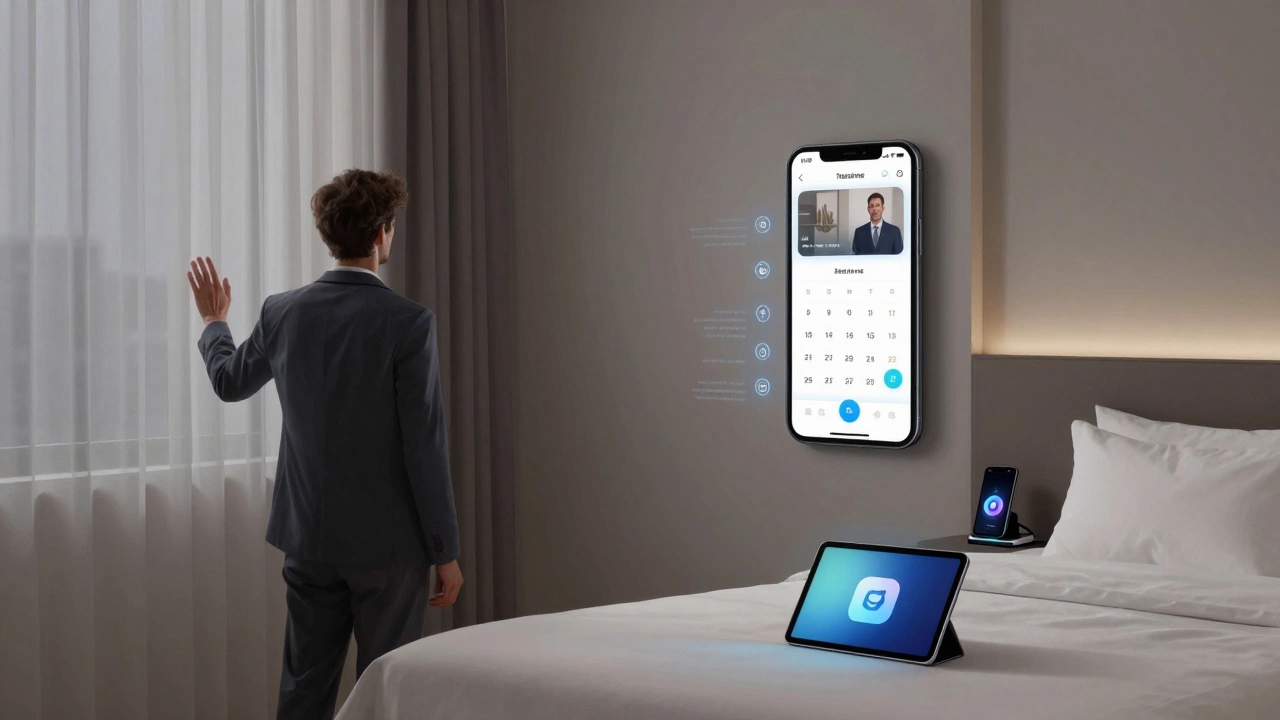
The best business hotels don’t just offer tech-they integrate it. Think: app-based room controls (lighting, temperature, curtains), voice assistants for setting alarms or ordering coffee, and seamless integration with calendar apps to auto-adjust room settings before your meeting. Some hotels use AI to learn your preferences: if you always ask for extra pillows or dark roast coffee, the system remembers. This isn’t gimmick-it’s efficiency. When your environment adapts to you, you spend less time managing your space and more time doing your work.
Consistency Across Locations
If you travel often, you need predictability. A business hotel chain that delivers the same quality-same Wi-Fi speed, same desk height, same breakfast menu-across cities is worth its weight in gold. You shouldn’t have to relearn the system every time you land in a new city. That’s why brands like Marriott, Hilton, and Hyatt invest heavily in standardized business amenities. Even if you’re not loyal to a brand, look for hotels that follow proven business hotel models. Consistency reduces stress and saves time.
What’s the most important quality in a business hotel?
Reliable, high-speed internet is non-negotiable. Without it, video calls drop, files won’t upload, and productivity crashes. Everything else-quiet rooms, workspace, dining-depends on being able to connect. If the Wi-Fi fails, the hotel fails.
Are business hotels more expensive than regular hotels?
Not always. Many business hotels cost the same as mid-range chains but deliver more value. You’re paying for reliability, not luxury. A $180 business hotel with fast Wi-Fi, a good desk, and 24/7 printing is a better deal than a $220 boutique hotel with no printer and spotty signal. Look at what’s included, not just the price tag.
Can I use a regular hotel for business travel?
You can, but you’ll pay in time and stress. Regular hotels often lack dedicated workspaces, reliable internet, or 24/7 services. You might end up working in the lobby, waiting for a printer, or skipping breakfast because the café opens at 8. For occasional trips, it’s manageable. For frequent travel, it’s unsustainable.
What should I ask before booking a business hotel?
Ask: "What’s the minimum Wi-Fi speed?", "Is there a 24-hour business center?", "Can I check in early or check out late?", and "Are rooms soundproofed?" If the hotel can’t answer clearly, keep looking. Real business hotels have these details on their website.
Do business hotels offer meeting rooms?
Many do, but not all. If you need to host a client or team, check if the hotel offers private meeting rooms with AV equipment, whiteboards, and catering. Some charge extra; others include it for guests. Don’t assume-ask upfront. A hotel that doesn’t offer meeting space may force you to book a separate venue, adding cost and hassle.
Choosing the right business hotel isn’t about luxury-it’s about removing obstacles. The best ones don’t make you think. They just work. Whether you’re flying into Chicago for a quarterly review or landing in Berlin for a client pitch, your hotel should feel like an extension of your office: quiet, fast, reliable, and ready when you are.